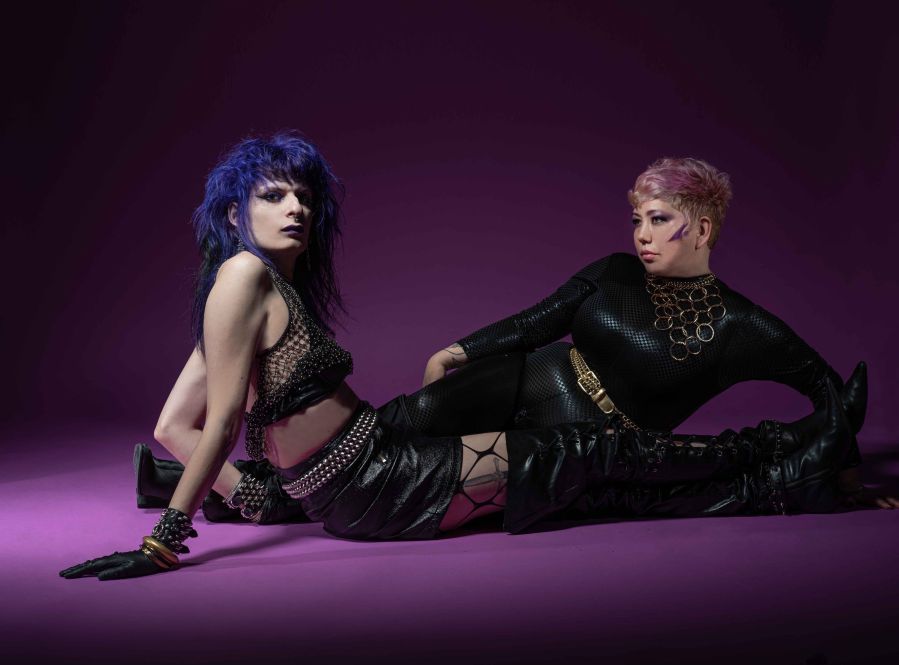
DECAYCAST PREMIERES: Yama Uba breaks down the walls with “Facade”

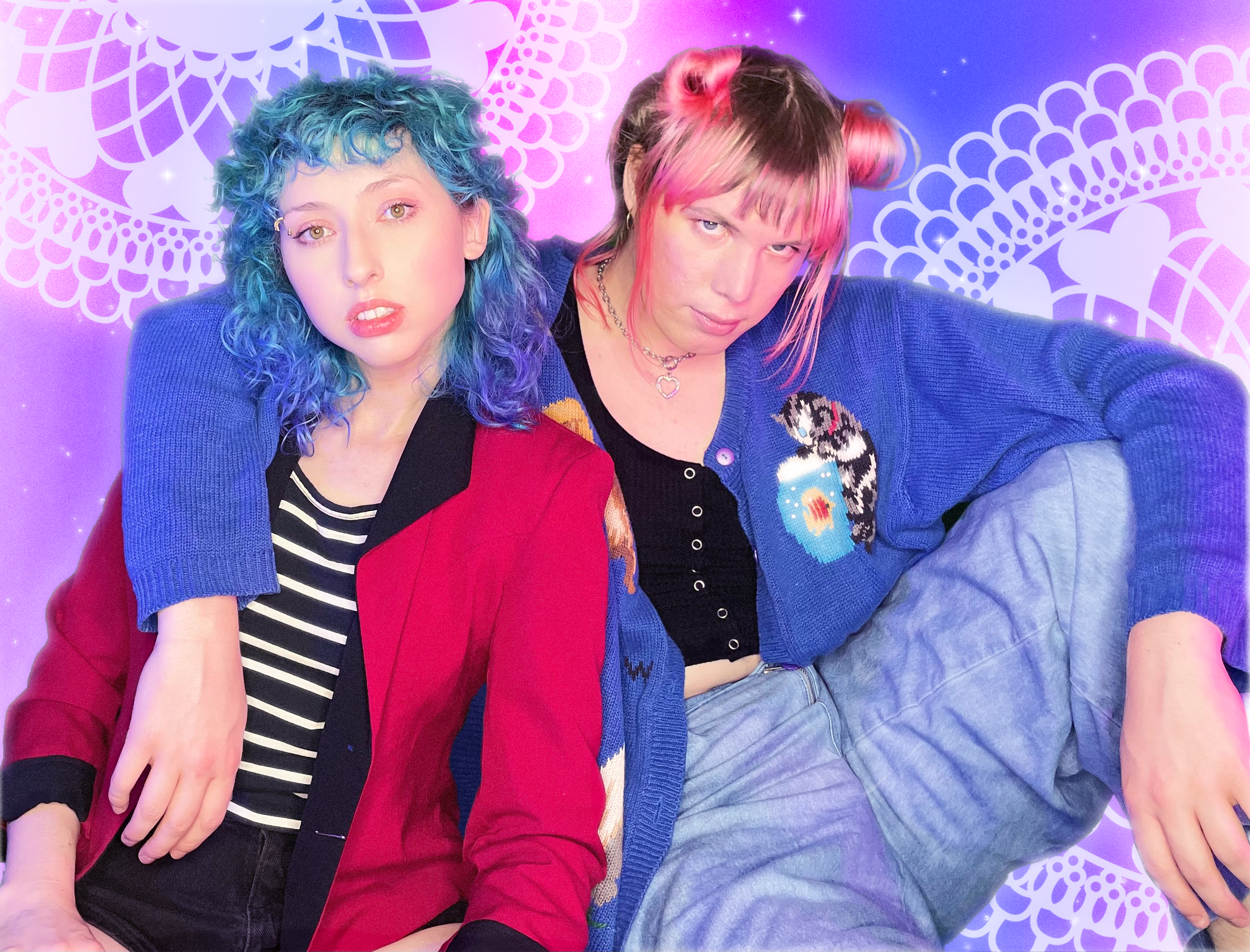
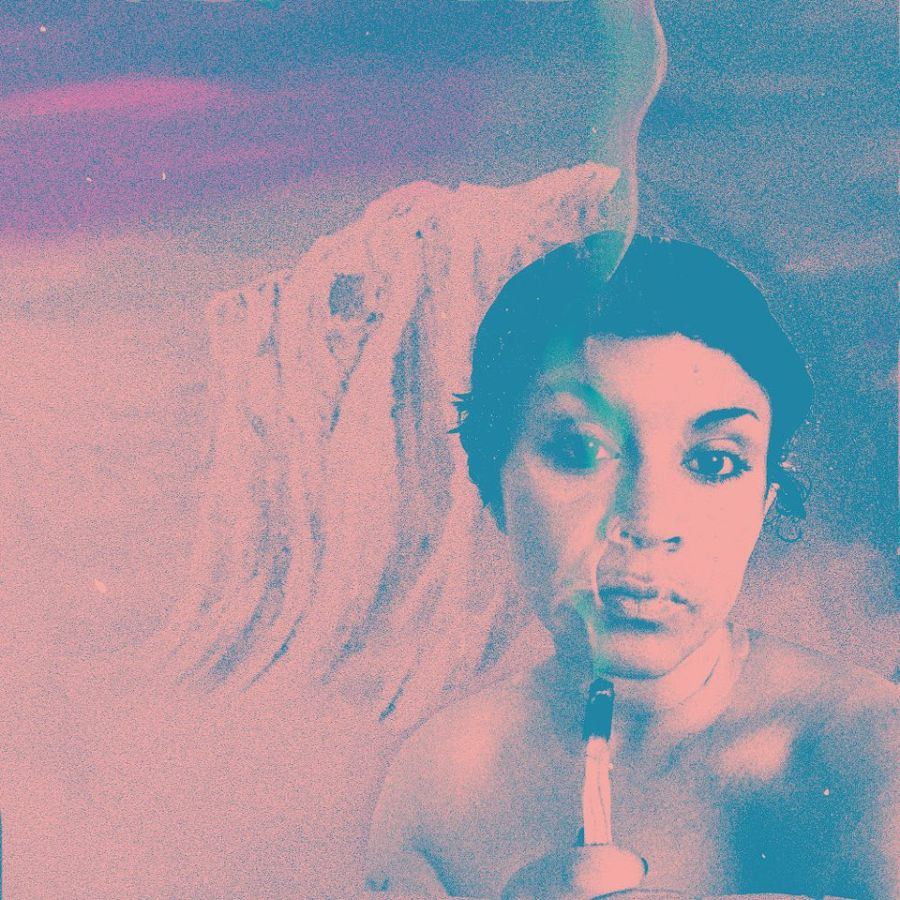
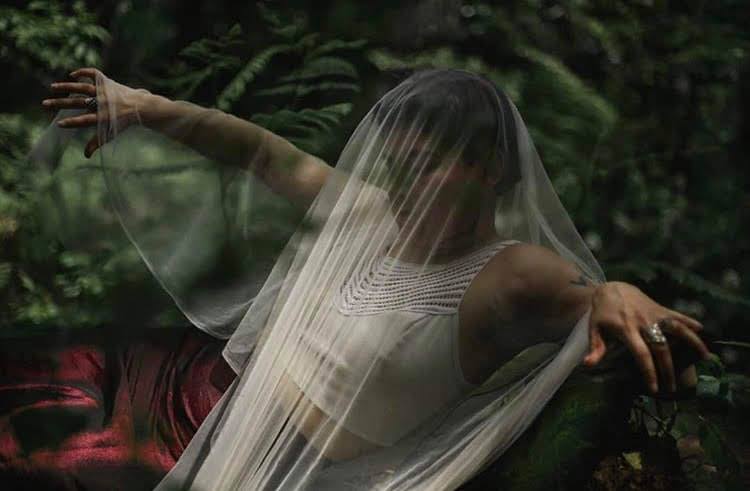
YAMA UBA are no strangers to breaking down walls. Through the strings connecting their previous musical efforts to the seminal album, Silhouettes (releasing January 23, 2024 on Psychic Eye Records and Ratskin Records), the US-based duo of Akiko and Winter has slowly and methodically chiseled a sonic and conceptual world all their own.
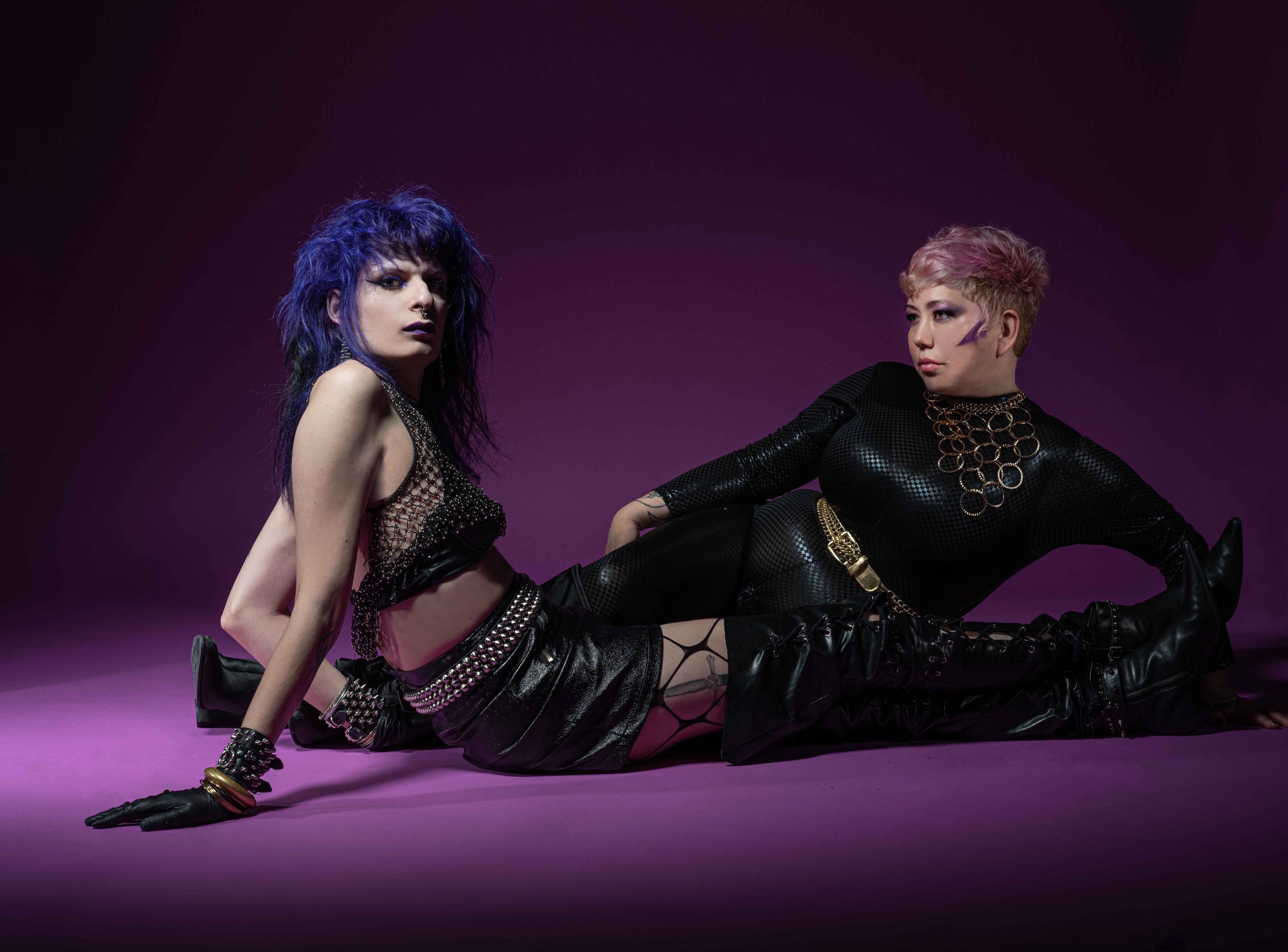
Through music videos and selective live performances culminating with a Fall 2023 Japan tour, the duo has been steadily building momentum, but all at their own pace and by their own rules. Silhouettes is the culmination of years of refining a vision over time, yet it feels natural and timeless in the most refreshing way possible. Decaycast team sits down with the duo to discuss their new album Silhouettes and their single “Facade,” which is out today! Listen below, and pre-order the album today.

What ground does Silhouettes cover, musically and conceptually?

Akiko: The album didn’t start out with any particular concept, but just because of the timeframe of our writing — five years, as opposed to one-and-a-half or two years in my previous work, we ended up with something that represented that passage of time in our own lives. I think, more universally, the album also speaks to the long-term process of personal evolution. These songs individually are all about the sometimes-difficult moments that give us an opportunity for reflection, and lead to self-discovery. As a whole, I’d say the album is about personal transformation. It’s about how for that to happen, you have to be willing to shed false or outdated beliefs, confront aspects of your life and self that aren’t fun to look at, and give voice to the parts of yourself that have been silenced.

Winter: Silhouettes covers a lot of experiences and expressions of transforming and transmuting energies. It’s a representation of becoming many different forms of self. It’s one the first recordings of me debuting my vocals and saxophone in a full album. It’s an album we both had full creative freedom with, and we were able to expand musically as much as we felt we needed to. We both went through many changes and transformations throughout this album, and this album portrays and reflects that.

Your latest single is called “Facade.” What is it about? 

Winter: “Facade” is about tearing down the walls of false illusion, dismantling any and all power over us that keeps us from being our truest and best selves. It’s a commemoration and celebration of dismantling old structures of belief from a worldwide perspective, within ourselves and outside ourselves, taking down all forms of oppression and injustice.

Akiko: I also think of “Facade” as being about dismantling power and tearing down the illusion of hierarchy. I’ve always had that anarchistic instinct to destroy systemic power structures in the larger world, but this song is about the moment you realize how insidiously those power dynamics are replicated in your own life. It’s about no longer making it your sole responsibility to make a relationship work, and finding the courage to admit that your only way forward is out – out of an abusive situation, out of toxic cycles, out of a social environment that seeks to pigeon-hole, define, or take advantage of you, and out of any structure that is held up by holding you down. It’s about finally breaking free from oppressive power dynamics, and then watching those who held you down fall apart around you. That’s when you can recognize that the abuse you tolerated, to some degree, required your own permission. Even if you get mad at yourself for that, acknowledging and taking responsibility for it becomes its own form of freedom. 

We might not individually have the power to stop the most advanced military in history, but we do have the ability to state that the institutional narratives are outright lies, and to simply refuse to be brainwashed… The crack in the facade, and the tumbling of the tower, starts with each of us.

In “Facade,” there is a long refrain of “It’s just a kiss from a narcissist” throughout the outro. What are you referring to?

Akiko: The song is about breaking free of abuse, and that line speaks to how it feels when you realize how cheap and effortless the scraps of recognition or affection are that you receive in uneven relationships. When we sing it, it reminds me how many times I would have to repeat something like that to myself, sometimes for years, to build up the resolve to finally escape an abusive relationship. I think that, as well as the exhilaration of finding your freedom, is something any abuse survivor can understand. 

We don’t limit ourselves with our sound and we embrace fully going anywhere we want to go. We utilize anything and everything we can, constantly experimenting and approaching our music in a way that feels exciting.

I also think of those lines in “Facade” as I witness global events, where you can see the dynamic of the narcissistic abuser and the abused in imperialism and in capitalism. It feels very personal to witness, for example, the US and Israeli government committing genocide in realtime, right in front of us. In this case, the US and Israeli governments play the role of the narcissist, who only sees others as tools to get what they want, and not as human beings. In colonization, we see the same tactics used in abusive personal relationships: systemic gaslighting, outright lying, abuse of social and institutional power, enforced isolation of the victim, humiliation and dehumanization, leading finally to physical harm or murder. We see the colonizer’s attacks on culture, history and identity in tandem with attacks on the colonized people’s humanity and on life itself. It’s very similar to how personal attacks, criticism and belittling are a part of a larger campaign for total control in abusive personal relationships. 

We might not individually have the power to stop the world’s most advanced military in history, but we do have the ability to state that institutional narratives are outright lies, and to simply refuse to be brainwashed. We can say, “We see you, the richest and most elite people in the world, using all the world’s wealth without our consent, to kill the poorest and the most powerless. You employ weapons of mass destruction to purposely target and kill children, poets, doctors, and teachers, and then you claim a moral superiority.” That has to happen for any other change to take place, and it’s something we’ll always have the power to do. The crack in the facade, and the tumbling of the tower, starts within each of us.
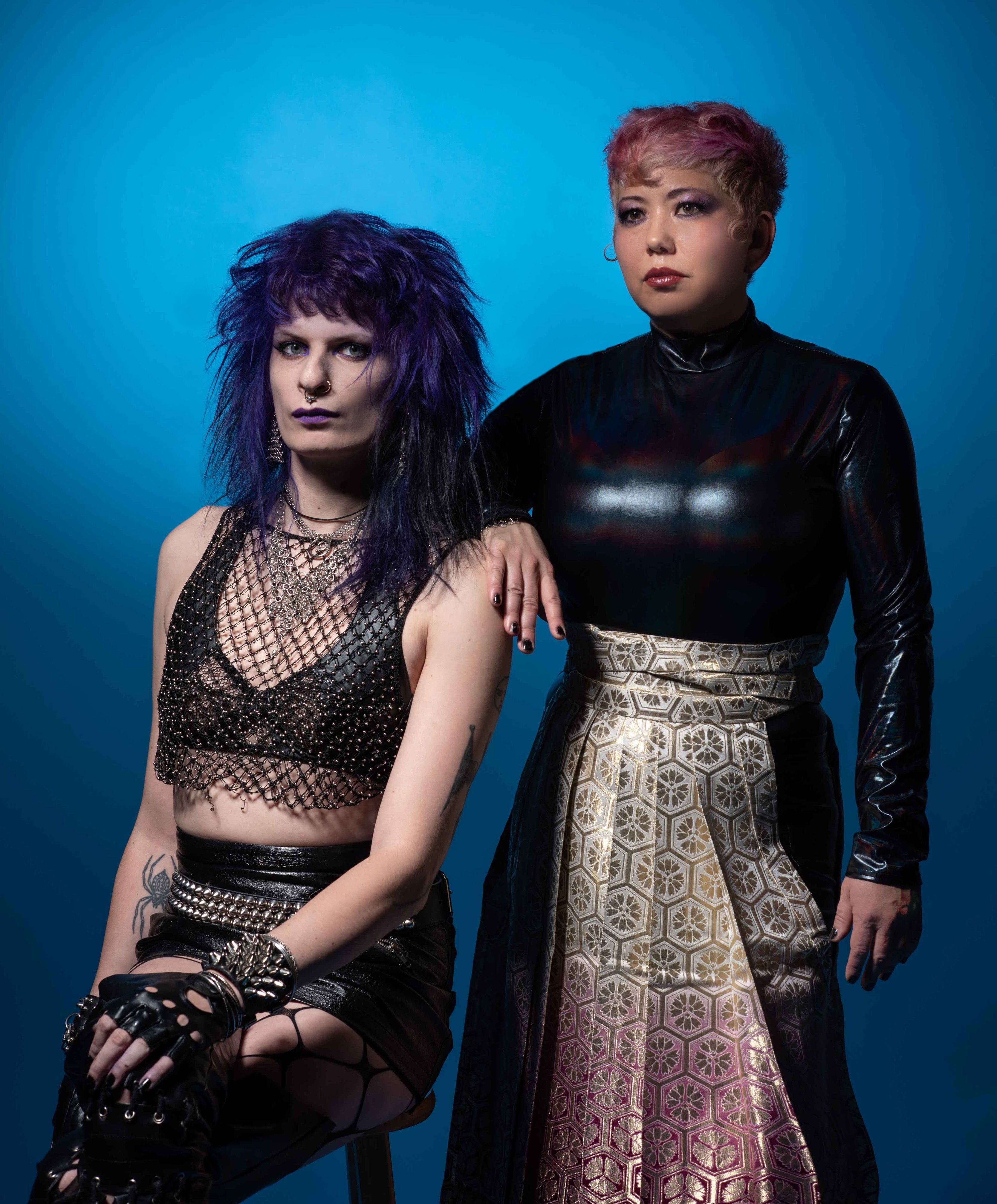
There is a noticeable difference in the sound of Yama Uba vs either of your previous projects, Ötzi or Mystic Priestess. How does the difference in sound palette affect your compositions?

Winter: The difference is there are no bounds in Yama Uba. We don’t limit ourselves with our sound and we embrace fully going anywhere we want to go. We utilize anything and everything we can, constantly experimenting and approaching our music in a way that feels exciting. We are able to break out of our comfort zone to explore and express ourselves in every way possible. One song can portray the energy of tearing down walls and setting fire to everything, while another is about looking at something from a new perspective, and rebuilding everything in a new way. 

Akiko: I think because we have less defined roles in Yama Uba than in a traditional band structure, we can start purely from the intentional and emotional root of a song. We can play improvisationally and build off that if we want to, but it’s not required to have a bunch of people jam together until something clicks, and that alone makes a huge difference. It’s more like, “I’m feeling a song about this subject. Here are the lyrics, or here is this guitar line” – and then if we’re both feeling it, we build a world around that emotion, supporting it with whatever seems appropriate. Of course I’m unlikely to take up guitar or saxophone in this band, and Winter is unlikely to take up bass or synth drum programming, but we can have all or none of those instruments at our disposal. There’s no sense that we have to, for example, write a line so the synth player has something to play. Every sound is purposeful and exists in service to the idea, and that is definitely freeing. I think it’s really advanced us both as artists. 

Winter’s vocals artfully emanate raw emotion on the tracks “Facade,” “Isolation” and “Claustrophobia.” What led to Winter’s singing on these particular tracks? 

Winter: I have always been shown great support from Akiko to sing more. At the time we wrote these songs, we felt it was fitting to capture the raw feeling and emotion in my vocals to signify the atmosphere of those songs. It’s a representation of how overcoming something is not always comforting or pretty. It’s about finding beauty and appreciation in the raw expression of releasing, and to find strength and power within that vulnerability. It’s about truly appreciating and embracing the rawness, no matter what it looks or feels like, because it is the most genuine form of expression. 

What inspires you as musicians?

Winter: I grew up listening to a lot of different styles of music. Everything from jazz, pop, punk and heavy metal. I draw inspiration from anywhere and everywhere. I am inspired by any form of expression that portrays a message and deeper meaning.

Akiko: I’ve always enjoyed all kinds of modern music, but in the past few years I’ve become very inspired by traditional musical forms from Japan. I’m learning several forms of traditional music and dancing arts, and by that I mean going back to 800 years ago! I also meditate and do somatic therapies for my chronic illness, which encourages me to sing and to learn scales from non-Western cultures. I’ve been playing music long enough that it’s become inseparable from life itself, so I view music and life in a very holistic way at this point, and as a sort of spiritual path. Everything in my life influences and inspires my music, and my music influences and inspires everything in the rest of my life. 

What’s next for Yama Uba?

Akiko: The next release after Silhouettes drops is a 2-CD compilation I curated on my label, Psychic Eye Records, that jointly benefits the people of Gaza and the unhoused community of Oakland, California, where I live. That compilation is called The Ancient Wall, and drops in early February. It has over 40 of my favorite bands, so I’m really excited to get that out there. The Yama Uba song on the compilation is actually “Facade,” so I’d encourage anyone reading this to buy the compilation, which will probably sell out pretty fast!

Then, we’ll have a new music video coming out that I’ve worked on harder than any video in my life, so I’ll be proud of it just being out there and existing. Other than that, I’m trying to learn to not always worry about what’s next, and just enjoy the present. I’ve taken a step back from the sometimes manic-feeling cycle of music production and promotion, and I’m just enjoying this quiet time before Spring. Nothing is fully scheduled yet, but Yama Uba will definitely be touring parts of the US, and is likely to tour Italy, in 2024. Japan was incredibly fun to tour in 2023, so we might go back there in 2024, and maybe to Australia. We’re interested in so many things and so many places that I try to just stay flexible, and be open to the opportunities to come to us.

DECAYCAST Premieres: A.S. Valentino summons sleaze, synths, and sin in new single “Let Me See Your Sin”

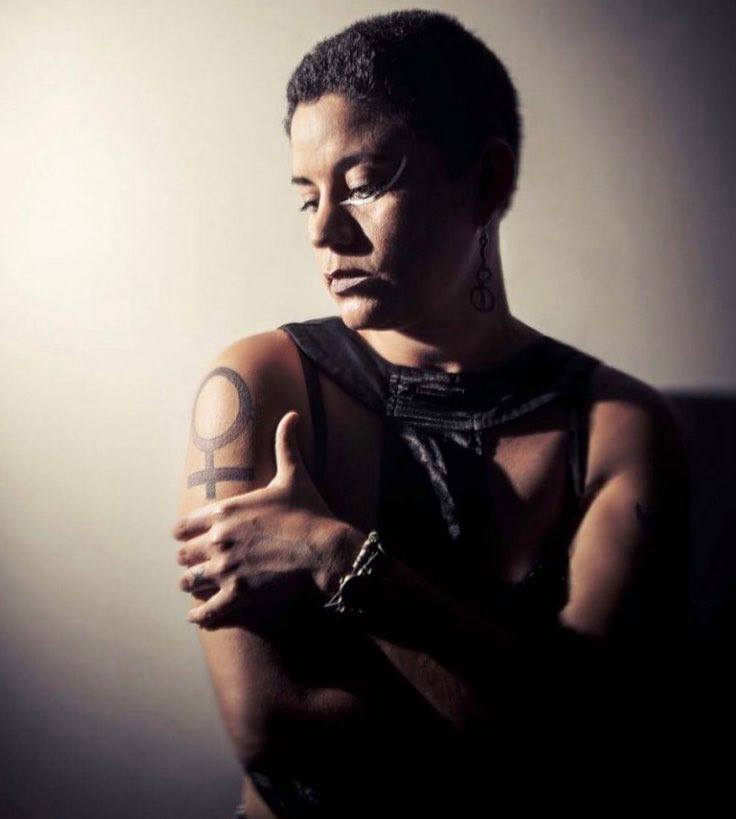
A.S. Valentino’s new single, “Let Me See Your Sin,” is a slinking exploration of kink and redemption and is the first track from Valentino’s forthcoming debut album, Summoning on Psychic Eye Records. In “Let Me See Your Sin,” synthpop glides effortlessly into darkwave, with occasional industrial elements grinding against each other, all underscoring lyrics that swell with pain, resolve and love. Describing his music as “trans darkwave,” A.S. Valentino expands in the interview below on the almost inseparable links between his trans identity and his music. In “Let Me See Your Sin” and throughout the album as a whole, A.S. Valentino’s Summoning invokes enough power and mystery to set him apart as a gatecrasher to watch in 2024.

What is your newest single, ‘Let Me See Your Sin,’ about?

A.S. Valentino: “Let Me See Your Sin” is about the redemptive power of BDSM and kink to expel or reclaim shame around sexuality and desire. I was raised Catholic, and I am very attracted to the overlap between religious imagery and ritual and the power of ritual in BDSM and D/s relationships. Particularly in Catholicism, it’s so kinky, gory, sadistic and masochistic all at once. And of course, I enjoy the blasphemy and perversion as well, that’s an added bonus. Catholicism is all about shame, guilt, and the confession of sins for repentance, to be wiped clean again, to be accepted into heaven. In the world of “Let Me See Your Sin,” sinners are encouraged to present their lust, sins and impurity like holy sacraments to be amplified, bringing rapture and redemption through the ritual of BDSM.

How do you describe your music generally?

I would describe my music as informed by darkwave, coldwave, industrial, synth pop, and metal at times, but filtered through a specifically trans and queer lens. The music on Summoning vacillates between creepy and sexy, frenetic and crushing, but some songs are pretty melodic. I like to describe it offhandedly as a soundtrack of sleaze, synths, and sin. 

What inspires you to create the kind of music that you make?

I am drawn to dark music, to the interplay between dissonance and melody. 

I started this project about the same time as I started medically transitioning. I think my music channels the anxiety of being transgender in a world that hates and fears us. You can hear my voice changing over the course of the Dancing with Dysphoria EP to Summoning, my debut album. Rather than hide it, I leaned more heavily into the androgynous, gravelly sound of my voice. It’s very vulnerable to record a record while your voice is actively changing. I also leaned more into how much of the world sees me, as monstrous, shapeshifting, that which subverts and perverts the natural order. 
On the one hand, a lot of my music dwells in the darkness in life – oppression (“Gatekeeper,” “Circle of Dissonance”), death and mortality (“Bodies,” “The Attic”). And in other ways, I explore what is life-affirming for me – kink as spirituality, trans self-determination, the power in being a monster, of being a threat to the order of society. 

“I think the synthesizer is inherently sort of a trans instrument – it can emulate and embody new sounds, despite how it looks, and is infinite in its expression.”
— A.S. Valentino

The title of your upcoming album is Summoning. What is this album summoning?

The track “The Summoning” is about returning to what is natural and authentic. It starts with the moon calling, asking you to shed your identity, your clothes, name and money and instead bring your “claws, hair and fang.” 

I think for me the album is a summoning of what is natural and authentic in me that others may see as unnatural. I believe that people are often most authentic when they are children before they have completed their indoctrination and domestication into society. Part of my adult life has been dissecting this process of indoctrination, shedding the parts that aren’t actually me. It’s also the first full-length I’ve put out since medically transitioning and the first one under A.S. Valentino, so it’s a couple of firsts all in one. 

There’s also a ton of sounds from the natural world on here even though they sound unnatural. Wolves, bats, hyenas, vultures, wind, stuff like that. I love pairing natural sounds with unnatural, synthesized sounds, which is why there’s also a lot of live, improvised percussion samples on the record. I don’t own many proper percussion instruments, however, so I usually improvise with different items and textures around my house. I love going on a sound hunt, looking for what would add atmosphere or excitement to a track. 

I think the record also summons the duality of lightness and darkness in myself and in life – the horror and the beauty, the dissonance and the melody, and the anxiety in between. The song “Bodies” deals a lot with that. How the body can be a site for miracles, but also horror, and the way bodies are controlled, perceived, and policed by society at large – particularly trans bodies, Black and Brown bodies, and so on. 

What is your musical background, and how did you decide to focus your output into this sonic sphere?

I started out in punk, indie rock, and metal bands, and then fell in love with drum machines and synthesizers and the ability to work alone and write whole songs and control all the parts. I think the synthesizer is inherently sort of a trans instrument – it can emulate and embody new sounds, despite how it looks, and is infinite in its expression. 

I spent over a decade writing electronic pop music. I liked the challenge of trying to write hooks and earworms. However, my original creative impulses were towards darker music. I’ve struggled with depression throughout my life, so darkwave is a natural way to channel that part of myself. Songwriting is often a process of chewing and digesting for me. However, you can still hear some of the pop boy come through on “Summoning”. 

The song “Butch Dyke” is a sort of industrial ode to butches of the world, which is an interesting flip from the standard “sexy femme” trope and implied (hetero)sexuality of most of industrial music. I have to ask: Which came first in writing this song, the lyrics, or the music? And what was your thought process as you worked on the track?

This is an interesting question. I would say the concept came first. I wanted to write a tribute to my butch ancestors, and in particular, a love song to the first butch I ever saw. 

I grew up in a very rural, isolated area and didn’t see my first d*ke until I was 17. Me and my best friend had fake IDs and we snuck into a bar and that was where I saw my first butch, shooting pool, short cropped hair in a white T-shirt. I’d like to say I had a revelatory moment and was struck with awe, but honestly, I felt a reflex of repulsion and fear. What I didn’t know at the time is that I was seeing a part of myself that I wasn’t ready to accept. 

But also, I think that’s a common reaction to butch and transmasculine people in general. Our existence is a threat to many. It’s taken many years to accept and love my butchness and transness, and I wrote this song as a sort of love song, a reclamation, and an apology to that first butch I ever saw and to all of my butch and trans ancestors, many of which have disappeared into history, their names and stories erased.

It’s also interesting because I feel like in the queer community there is a narrative that the “butches are disappearing” because more people are choosing to pursue medical transition. I guess I don’t see that as mutually exclusive. I am butch and I am trans masculine and I am forever grateful to my butch ancestors who made it possible for me to exist in this form. 

In terms of the music, I wanted it to sound intimidating, confrontational, but also sexy, with a lot of swagger. I actually wrote several different drafts and this is the one that made it on the record. 

What artists do you think have influenced your music?

Honestly, I find this one of the hardest questions to answer because I have a voracious appetite for music. I listen to so many genres and pull inspiration from so much. Just today, I listened to modal jazz, house, industrial hip-hop, doom metal. I guess in my genre I would say big influences are Siouxsie and the Banshees, HEALTH, She Past Away, Paradox Obscur, Author & Punisher, artists like that. I’m sure I’m missing a ton. But in terms of an artist I’ve probably listened to more than any other artist – I’d have to say Prince. 

Will you be touring in 2024? If so, where do you foresee going?

In 2024, I plan to do a West Coast tour and play cities from Seattle down to the Bay Area, maybe down to LA as well. 

DECAYCAST Interviews: Jacob DeRaadt interviews Northeast Artist & Experimentalist Seamus Williams

Seamus Williams Worcester, Massachusetts is one of the most singular artists in the northeastern American experimental sound that I experienced while living there for five years.  Detritus and negative space conspire to make odd jabs at your senses when engaged with one of his recordings as TVE.  Audio diary and lo-fi are throwaway terms that I would hesitate to use, but the sounds themselves always pop up in unexpected ways.  In much the same fashion, Seamus’ visual mixed media collages accomplish the exact aesthetic urge in a perfectly complementary format.

  I had the pleasure of having Seamus’ visual work up at a visual gallery in Portland, Maine in 2019.  We had a couple beers, I put on some Human League record, and we talked about his perspectives on his own processes and compulsions as an artist.  – Jacob Deraadt

Listen to the interview here:

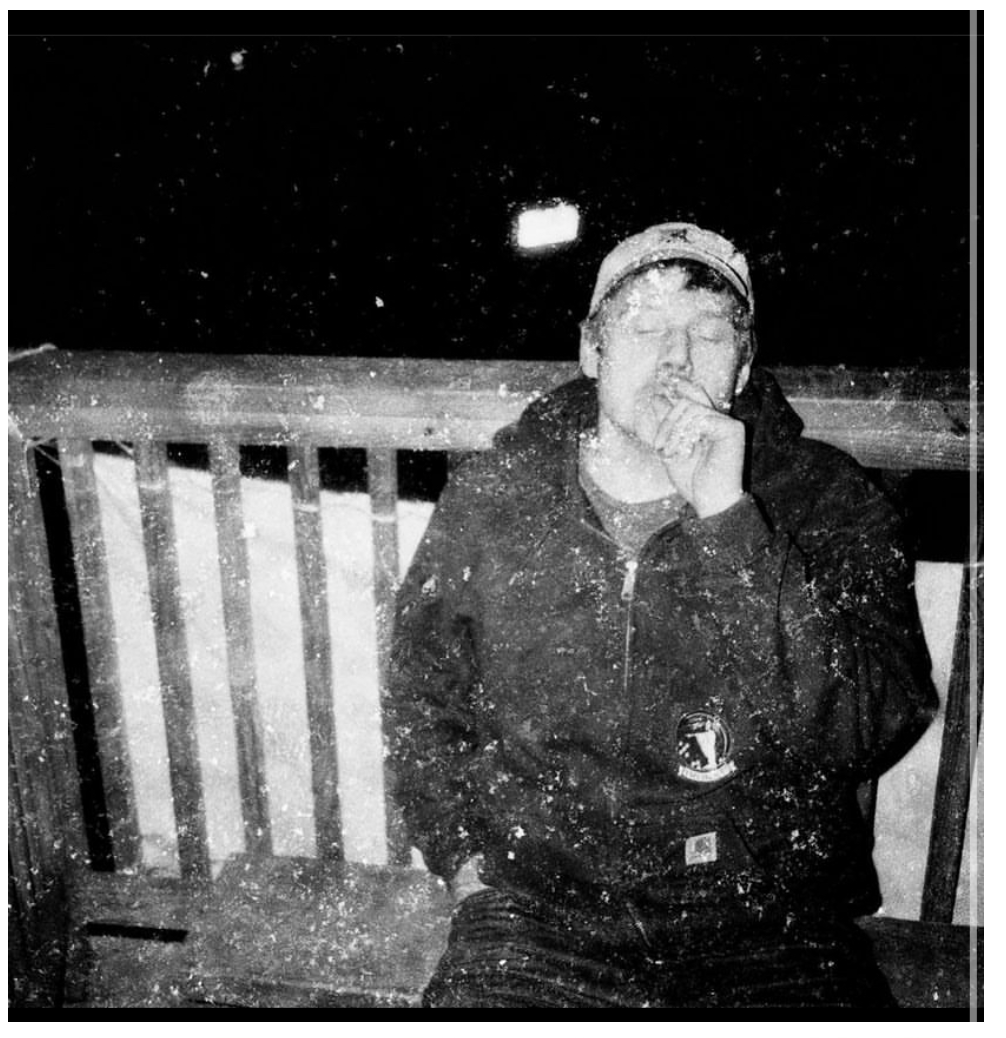
Photo: Tim Johnson
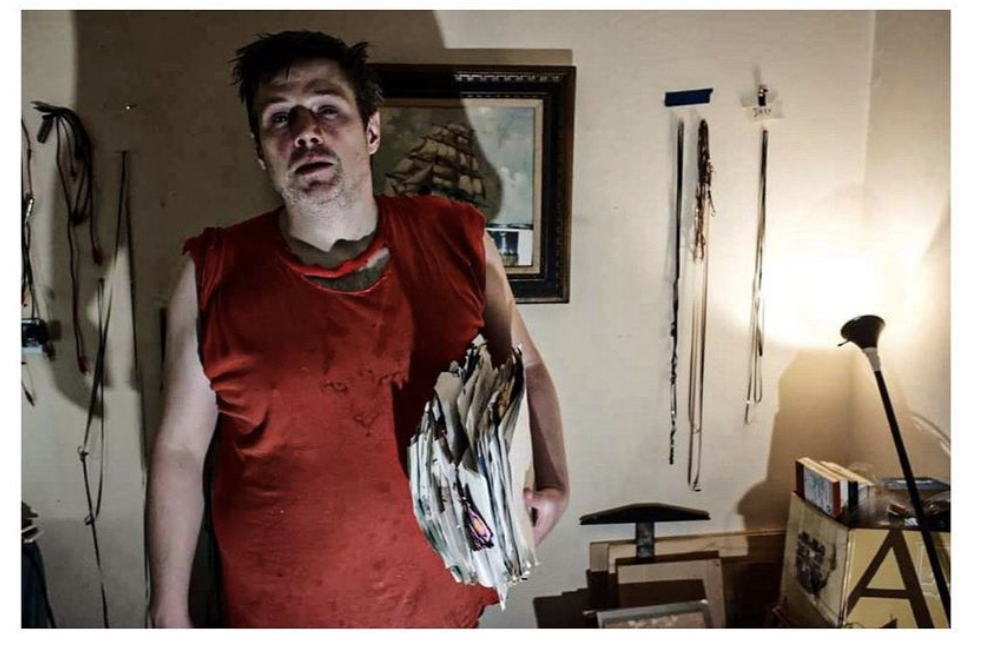
Photo: Tim Johnson

DECAYCAST Premieres: GORGEOUS DYKES DAZZLE IN ‘SWORDS REVERSED’

GORGEOUS DYKES DAZZLES IN BRAND NEW VIDEO ‘SWORDS REVERSED’

Gorgeous Dykes is a dynamic duo from Oakland, CA. Their sound is comprised of new wave, house, post-punk, funk, and synth pop that keeps the dance party going all night and until the sun comes up. Gorgeous Dykes brings the magic girl energy to encourage divine unity in uplifting the spirits in the queer/trans community alike. Their latest album “Swords Reversed” is a powerful statement to keep looking up to what lies ahead. 

Supporting their rousing album Swords Reversed (set for release February 11th, 2022 on Psychic Eye Records), Gorgeous Dykes unveil the music video to their first eponymously named single. Swirling with anime-worthy imagery, the band dances amongst nebulas and falls through cotton candy skies while guided by euphoric, pulsating synths.

WATCH THE VIDEO HERE:

Where do you draw your inspiration from musically and artistically?

Lucy: We draw a lot of our inspiration for our artwork from magical girl shows. We’re inspired by a lot of  80’s post-punk bands, but also really enjoy house music.

Ana: I’m really drawn to music that is meant to dance to, to move your body to. I’m always searching for music that gives one a certain frisson and to learn about what elements contributed to that in a song. It’s fascinating and challenging.

Who are some of your favorite artists you’ve performed with and/or would love to see yourself performing with?

Lucy: I would like to play a show with Sneaks.

Ana: Totally. That would be a really cool time. 

Tell us more about your upcoming album release. What led you to write this album?

Lucy: We tried a lot of new things and experimented with a lot of new sounds. We  wanted to write an album where each song felt unique and had space for its own feel. 

Ana: We still have two more singles we’re working on getting out that we’re really excited about. Since a majority of it was written during the lockdowns, I had a lot of time to get introspective and philosophical, ha. We tried to tell stories about isolation and regeneration – coming out on the other end. Some of them are just about us being in love, which whoever would or could have a problem with that, can play in traffic. 

How does the process begin for you writing songs? Is it always the same or different each time?

Lucy: A lot of the times we like to start with a beat that we can jam on/groove to. We always like to start with either a melody or beat and just let the song evolve from there. 

Ana: It definitely has to start out with room for us to mess around and see what sticks first. Sometimes I’ll hear a new melody jump out in my head that couldn’t have come from anywhere but the song and that’s always a cool moment. Lucy is really inspiring to work with – she has damn near perfect pitch. She’s so humble about it, though.

What is your favorite song on the album?

Lucy: I think for me it’s Unsolicited because it has a really fast and fun energy that I’ve always wanted to create in a song. It’s also really enjoyable to play.

Ana: It’s hard because I like them all so much but Swords Reversed was when I  felt we were really in our element. I  actually felt very emotional when writing the lyrics, which while I tend to put a lot of feeling into writing lyrics, I don’t usually get all choked up like that.  

How do you see yourself as an influence to the younger trans/queer community?

Lucy: I haven’t really thought about it that much because I’ve always felt like I was the one looking up to other trans artists for inspiration and motivation but I hope I can inspire other trans people to just be themselves and wear whatever they want and have confidence about it and I’d like to think of our music being sort of a background theme song to that feeling.

Ana: I would hope to be more of a tool or comfort if possible, rather than an influence I suppose. If someone younger found our work and could appreciate it and if it could help get them through a tough time or to stand up for themselves, that would make me happy. 

What advice would you give to someone that aspires to be a part of the trans/queer artist community who has trouble meeting other peers?

Lucy: Don’t be afraid to put yourself out there and try to meet other  queer folks in the community – you never know who can help you or motivate you to get your art  out  there in the world.

Ana:  Reach out to collab with someone whose work you admire, show your support when you can and practice maintaining a strong sense of integrity. Look for kind people who don’t want the world on a platter. As an introvert with a couple of mental illnesses, I would say don’t hide yourself but also value yourself enough to recognize the qualities in others that make you feel safe. Nobody’s perfect but as long as there is love and (clearly demonstrated) respect between you and the other person, connecting with special people is so worth it. 

Do you have any plans to do a tour?

Lucy: Yes, we want to go on one!

Ana: If we don’t get to go on a tour (I’ve never been on one before) I’m going to climb to the top of a mountain and scream, ha. It’s a huge goal.

Noisy Experiment: Rodriguez and Soliday’s PONIIA Series Encourages Real-Time Collaboration Between Artists Trapped In Self Isolation

interview nuggeta
Live Video synth Screenshot from PONIIA  (Courtesy. J. Rodriguez)

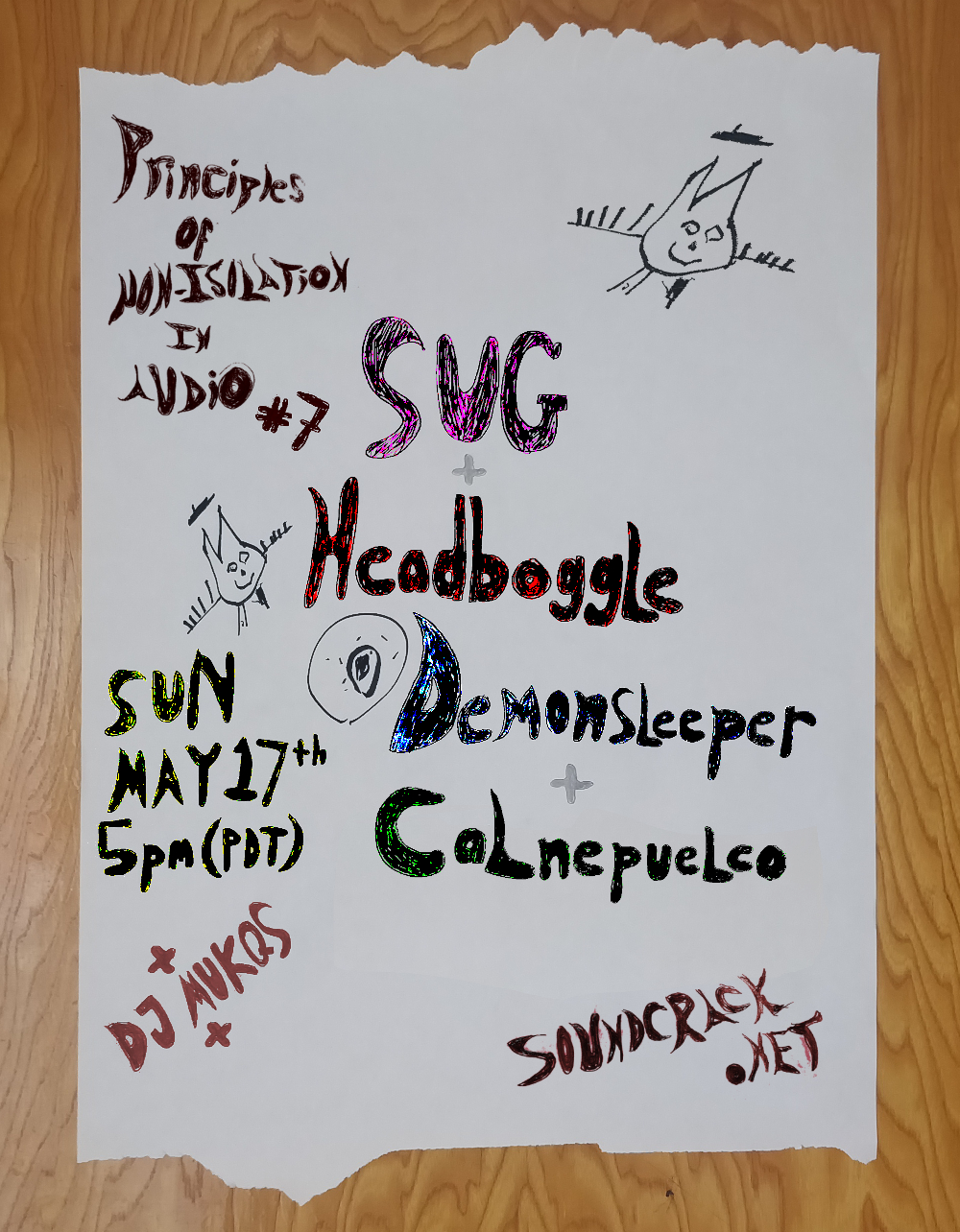
Like many, the pandemic has all but uprooted underground arts communities, music and activist scenes alike with no clear direction ahead.  Sound Artists, experimental music creators, composers  Bran (…) Pos and J. Soliday have been feeling the effects of quarantine in their own ways, like many,  their lives were rapidly altered by the Covid-19 pandemic. Nobody really knows where this is heading, but the only thing that everyone can seem to agree upon is that the world is drastically different now. Despite shaky, shifting times, and a worsening political climate, music (and collaboration) remain a consistent grounding force,  which, for many,  provides a temporary reprieve from an apocalyptic news cycle with seemingly no end in sight made exponentially worse by Neo Con death cult racist responses. But there is respite, at least briefly. Adventurous, wild, chaotic, sound, maybe, at least for a few hours, can save us from the mental anguish of the unknown engulfing  right outside our  very studio window. What began as simple “online jam session” between friends and  longtime collaborators has now turned into a weekly experimental series, with it’s own twists and turns,  technology. and a dedicated following  The new collaborative online series Principles Of Non Isolation Audio, or PONIIA for short, separates it distinctly from most of the other online concerts and perf-

unnamed
Cleav’d Cleaver (L-R: J. Soliday , J. Rodriguez

ormances. PONIIA boasts co founders,  Jake Rodriguez  (SF/Richmond, CA) and Jason Soliday (Chicago, IL) who accepted the challenge of creating a more intimate experience for both their participating artists and audience alike. The series has since blossomed into something bigger and more important than the artists seem to admit with their  casual discussions of it’s origin, however it’s clear that they understand the importance of a more inclusive experience that their series creates, even for folks who maybe couldn’t access live music performances for a number of  different reasons . All these things make  “Principles Of Non Isolation In Audio” special and unique, We’ve tuned in for three of the streaming events so far, and without a doubt this series has captured both the isolation that folks are feeling, as well as the necessity of real-time collaboration, something mere months again, for most, wasn’t such a life or death situation. Although musicians cannot be in the same room due to social distancing, real time audio (and video) collaboration regenerates the feeling of intimacy coupled with the magic of improvisation. complete with all of it’s rewards and risks; magnified through the online performances.  PONIIA has granted something that was once taken for  granted, maybe lost, and now once again, turned streaming into a very familiar feeling for both audience and performers alike. We sat them down from a safe distance over chat, to talk about the origins of their history of collaboration and the series itself.


You two have a long history of collaboration, when did this all begin?

JS: Jason Soliday
JR: Jake Rodriguez

JS: When did we meet first?

JS: Not sure if it was in Chicago at Deadtech, and you were on tour or if it was that first tour I took out west, sometime around 2000-01. Either way blame it on Blake Edwards.

JR: I also remember going bowling with you and Blake, and you guys got really competitive about it and then my bandmate Mike Guarino who didn’t want to come ended up slaying all of us.

JS: Ha! Yeah,  did we drag you guys out at like 6AM too?

JR: Real early. I was def not feeling it. We first played together at yr place maybe when i was on tour with Angie?

JS: I’d have to check the archive. My friend Amelia made a zine a few years back listing every show we did at Enemy, or at least all the ones we could document, though probably a few slipped through.

JR: So Jason curated Enemy for a number of years and I have had on and off relationship with running some kind of series as well

JS: Enemy existed from 2005 through 2012-ish (Enemy site/archive: http://www.enemysound.com)

JR: I started doing soundcrack broadcasts around 2007 or at least that’s when i started documenting them, sometimes regular, sometimes in fits and starts. At one point i started up the Crackscape project where I collected long form soundscapes from folks and made some myself and would randomly grab 4 of them and play them up against each other with some kinda realtime visualizer. Crackscape ran on the site 24/7 for several years.

JS: The Institute for Implied Imperfection was an improvisational streaming radio show I produced and performed in every other Sunday afternoon from September 2015 through March 2016, 23 broadcasts. Format was simple, I’d invite a friend or two over to my studio and we’d improvise live to stream for two hours, mostly unplanned, whatever happened happened. Most of the session recordings were also archived on my SoundCloud, but they’ve been down for a while now.

So this  blossomed like many experimental music friendships do, by touring?

JS: Yeah more or less. We’d run into each other every few years. I think mostly Bran(…) Pos (JR)  coming through Chicago, I didn’t make it out west too often.  2012 or so was the first tour I came out west?

JR: I think that was both of us solo till the last show or two? We played at Alice Coltrane Memorial Coliseum in Portland, OR (as Cleved Cleaver)

JR: That was JS on cut-up modular synth and me on microphone (as Cleved Cleaver)

So that was the first official collaboration, Essentially touring together?

JS: No, Jake  came through Chicago on a job maybe 6 months before that and we played our first duo gig at Enemy. Checking the Enemy archive, I’ve got that first Cleav’d Cleaver show happening at Enemy, July 26 2013. After that was the tour with the ACMC show Jake just mentioned, and then in 2015 we did the one and only official Cleaver tour so far. That tour was a trip… we slowly devolved over that tour. The tour started all chill free improv long sets by the end it was 5 minutes of full on noise, and gum.

So it began as more long-form improv and ended in five minute blasts of noise, What  changed on that tour that often leaves the final sets being the shortest but often times, the most intense, or maybe  this isn’t your experience?

JR: I don’t know. I’m not sure i remember it exactly like that but I’m sure you’re right. Was our last show in LA at Human Resources? That was a weird one for sure.

JS: Wasn’t a bad tour or anything that I remember. Yeah with you crooning to the passed out dude, and his phone going off mid show.

JR: That’s right there was maybe 4 people in a giant white reverberant void and one of them was asleep snoring.  I think it was just a process of figuring out what we wanted to be over the course of the tour.

JR:  Ya know i think what we do this kind of improv experiential dirge-digging you get into a deeper sorta groove with the digging as you get more comfortable — also and especially in a duo. my experience. duos go deep.

JS: I definitely started thinking of it as a “band” once Jake went vocals only, I think that sped up our sets too

JR: I had those chunky hydrophones i would shove into each cheek — stereo sucking sounds.

JS:  I was sampling Jake’s voice/mouth sounds in real time, looping & shredding them

JR: If you’ve never seen Jason (Soliday)  play modular synth — he’s amazing — and even more amazing to me — he sets up his patch at the venue every night. On tour we get to the venue and he just goes into the back of the room and starts setting his patch up.

JS: Maybe that’s why it was different every time,  I generally remember my patches, though I’ll switch things around here and there, just to keep myself entertained.

This idea  of thinking about it as a band is an important  distinction, improv is one thing, and it’s great, but i think the notion of a band, even if it’s two people, to me, can be different than just two people improvising, do you find this to be the case?

JS: We were still improvising the whole time, there weren’t songs. I tend to use words like band to focus my thinking about various projects, but that doesn’t meant it followed the rules of “band”

JR: If you play together twice in the same format with some kinda similar intentions, to me that’s a band, and then  that gets deeper in repetition.

JS: True. band is one unit.. as opposed to the improv grouping that exists for a single show, that same route as naming a thing, it’s not just jamming, now there’s a mission or something of the sort

JS: I think me calling anything we did a “song” is more about being concise. Like we’re going to say what we have to say in a small amount of time, and move on to the next statement.

JR: There were lyrics

JS: You learn something new every day. Not sure I knew that..I mean,  I had suspicions.

JR: I think we were basically a hardcore band

JS: I’d agree with that, though I think it’s still loose. I mean  we’re also talking about a band that has existed for a decade and has played 10? 11 shows? Me personally, I have a vaguely idealized “band” in my head that looks sort of like Ohne (the Dave Phillips/Tom Smith/etc. project), and I‘m always  aiming for something in that vein something that falls somewhere in the middle of hardccore/noise/actionist performace art, or at least that influence comes into play as an idealized form rather often when I start thinking of something as a “band”

JR: There’s always a disparity in perception between folks working on something i think. A former band i played in for a decade i found out at the very end that my partner, a drummer would every show take the address of the venue and turn it into a number sequence and thus a riff we would get into during the set

JS: well if we saw it the same way, it would get dull fast

Bringing it back to soundcrack radio show, Jake you mentioned you cued it up to produce these sort of collaborations between artists who may have not even known their  pieces were being played together, over each other etc?

JR: That was the concept, I semi-curated it actually so it wasn’t totally random. I had folks choose a time of day that their piece represented and i think i then interpreted that into a color-descriptor for the track, and then grouped them in smaller groups of similar colors, and then randomly grabbed one from each color group till there were four playing, as one ended a new group would cross fade in. I even had it so the visualizer had the names of the artists fade in when their piece faded in. i know, not rocket science, but I’m no rocket scientist.

I’m actually basing some of the visualizers for this series on those patches i used before.

vsynth2514323

So how did the new  series come  about, and do you see this as a continuation of these  early soundcrack experiments?

JR: I moved to Richmond, CA on March 1 after living in SF for almost 30 years. it was sorta in the planning for awhile, but also came together all of a sudden. i had the itch to do some pirate radio when i moved. we moved, got quarantined, all my work went away in an instant. i suddenly had some creative time on my hands. Jason you lost your work before all of us huh?

JS: Yeah, I was already out for a bit before all this got in the way

So, working with JS was just sort of a natural choice for the project?

JS: It was me tweeting about looking for something like Ninjam, right? I think I had seen the first couple of ESS streams and started thinking about how that was cool, but real-time collaboration would be more interesting, to me from a playing standpoint

JR: Exactly. Jason mentioned “would anyone like to set up a Ninjam server?” and i didn’t know what that was and looked it up. a quirky realtime internet audio jamming protocol that works right inside Reaper, a free DAW.

JS: I remembered this program called NINJAM from a decade ago when my old group I<3Presets would use it from time to time

JR: It was not hard to install and set up the server. i texted Jason and said “I think i have a Ninjam server working.  “Wanna try it out sometime?”

vsynth2514480

We hadn’t seen each other or played together in 5 years, and within 20 minutes, Jason and I were making noise together and it was super fun and intuitive.

JS: At that point I don’t know if I was thinking about doing a series, or just looking for a way to play and get out of the house without getting out of the house, But the series idea came pretty naturally once we got it rolling and found out  how easy it was, and I’m all for the we’ve got a thing lets share it idea.

I think that’s a key interest of the  series, is that it sort of breaks down the  ego/individuality in a  way that’s really refreshing, opening up this technology for more folks to find out about it and be able to use it, in a  time when and where it’s really needed

JR: there are several “realtime” internet jamming things out there–they are all booming right now. they are all weirdly quirky, but Ninjam is particularly quirky about dealing with latency. instead of trying to make it shorter, it makes it longer and sorta predictable and tries to lock everyone down to a bpm

2020-05-06 11.46.51

JS: I hate that metronome

JR: and then delays everything you hear by a “measure” so everyone is playing “in time” but a measure behind what they are hearing, we just all turn off the metronome. It feels very natural while you are playing, but really nobody is hearing exactly the same thing, but i never think about that while i’m playing. obviously, playing a tight song would be impossible, but for our freeform kinda stuff, it works out more than not.

JS:  Yeah, that’s the first thing I tell people. it’s weird if you start thinking about it, but if you just run with it, that weirdness disappears quickly

JR: if you try and get really syncd up out of time with your partners, it comes off like a call and response, because whoever is delayed (and i have no idea how Ninjam determines who comes “first”) responds after the initial event.

JS: I think like a lot of things though, it’s just figuring out the parameters you can’t control and then rolling with/against it… maybe I don’t notice it because I’m so used to working/playing with patches and systems that somewhat play themselves.. for me it’s just another factor of “oh, so that’s where we’re going now?”

Just another slightly chaotic control parameter. Any thought of releasing  any of the perforamces  as an actual release? do they get  recorded into reaper as well? or can they?

JS: Yeah, each person’s local session can record a version, and it’s all multi-tracked. We haven’t yet, but I’m curious to compare recordings from two different locations to see if they differ.

JR: We’re archiving them and putting them up on soundcrack.net If you feed em water at night they become podcasts.

JS: In general,  Jake and I still are thinking of this as radio, so the podcasts on soundcrack are the definitive versions, if there is such a thing.  Also of note, In the background here between shows, Matt Taggart and I used the server to record our debut duo record last week.  Also, in a way we’re enabling collaboration at a time when that’s more difficult.

Can you talk about when and who of the next few weeks?

JR: We don’t have dates yet for a bunch of folks but Headboggle, Demon Sleeper, Malocculsion, Tom Djll, Canner Mefe, Thomas Day, Anti-Ear,  all on the coming docket

JS:  Sug, Anthony Janas, Carol Genetti, Billie Howard, Neil Jendon… the list is growing

Lets talk about the ways this  series is connecting people in pretty morbid times?

JR: When Jason and I first tried this out, privately, we just had a blast. it really sort of felt like playing together in person, and  this experience was clearly something that each of us were missing–not getting right now. Like a random hookup.
(not that i know what that’s like)

We invited Matt Taggart to join us in another private session and he was obviously feeling the same. and then i played privately with Fletcher Pratt and it was a similar feeling.

JR: And ya know, there’s a bit of a tech hurdle to do this. It’s not super complicated if you have a computer and know your way around any DAW, and that’s not everyone unfortunately, but for folks that can get over learning a new bit of pretty simple kit it can be a remarkable stand-in for playing together in person. It checks off many of the same emotional/intellectual boxes.

With the added kick of us all collectively not getting it any other way.

vsynth25141133

Do you see yourselves continuing the series after  quarantine in some capacity?   To me, i think it  has a lot of impact and creative potential even outside of a quarantine type situation.

JS: It has an appeal outside sure. The idea has been mentioned between us, but I think we’re still mostly rolling with it as it goes. Though the last week or so we have really leaned into planning more than a week or two out so.

I do like that although it was the current situation that kicked this off, it still feels like something I’d be doing anyway… just maybe not in this form. There’s always a slight muttering from everyone involved of “next time for real” after these gigs.

JR: Yeah I love the radio thing tho i know when the real world returns there will be different attention challenges and i don’t expect a weekly commitment will last but who knows

JS: Hahaha I think I might have hit that point where I don’t know what the real world is any more! Yeah, not really, but it’s a pretty abstract concept at this point, isn’t it?

It does feel a little different, & that’s nice to hear from someone who’s has just been in the audience role.. since Jake and I also have a view of backstage, I sometimes wonder if that influences my perception of it.. from what you’re saying though perhaps not that much

JR: Truly I’ve been wondering also about folks that can’t come to typical shows for some reason, from social anxiety disorder to brain surgery

Exactly. That’s one of the reasons I think it has a lot of potential for continuation “after” the quarantine.

JS: I think actually physical shows are already not accessible To a certain percentage of people that would def be able to enjoy them or at least enjoy the music / sounds I’d they were able to physically be there for a number of different reasons.

JR: Distance and money too.

JR: We have a show coming with Demonsleeper (Oakland, CA) in duo with her pal Calnepuelco from Miami, FL. Long bullshit distances defeated,  that’s OK by me.

JS: I also recently saw someone mention at another live twitch stream I was at something about how they couldn’t go to loud shows anymore, but now they could because they could control the volume. So there’s definitely a place for this – theres  a lot of good reasons to carry on.

JR: Yeah,  I’d love to write a grant for this,  so we could guarantee funds for the participating artists, by that i mean all the musicians, the DJs, the video artists, maybe even the organizers. And by “love to write a grant” I mean “love it if someone else wrote a grant for me”

Can you remember any sonic moments that really stood out to either of you from the series?

JR: In the PONIIA with Danishta, Jacob, Greg, and Chris (dunno #4?) there’s a point where they all cycle through making the bass throb/riff, like this persistent pulse. and they each do it in their own way. greg on trumpet fart lips, Jacob by rubbing something, not sure between danishta chris who was doing what when. and they even all do the same note. and it cycles weirdly in and out of time because of the Ninjam delay and just works in the weirdest way and very much an interaction i would expect from seeing this group in person live (which i have).

In the last one, there were moments that Zach took it to another level

JS: Todd’s piano coming in at the end of his set with Albert on Sunday.. things were zoning along quietly, I was spacing out a bit here and then that piano hits and it was like yeah now this is serious.. it just got real heavy in here

JR: Ya–that piano was awesome i agree.

vsynth2515853

JR: when DJ LUCY first joined us, I gave her one direction which was “maybe pick music that doesn’t sound just like the performers since there’s little visual cues as to what’s happening when” and then Wobbly and pals all got so excited about her choices that they just started playing with her and imitating her sounds and it was exactly the opposite of what i was worried about it became THE THING.

Also getting text-bombed by a blown away Hans Grusel during the Soliday/Pratt duo in the first show was a major highlight

JS: That whole show worked so great.. knew that combo of players was going to be sick, but went way wilder than I expected..

What was the single most impactful sonic event you’ve  ever  experienced?

JR: Hearing the neighborhood cats all gather in mourning the night my cat Jennifer Kitty got hit by a car when i was a kid.

(PAUSE)

Oh I’m just fucking with you MERZBOW SF 1998

JS: Haha there was no way I was gonna top kitty funeral

JR: My babysitter and her friend went out to look if it was her and then they brought me out to see her. It was horrifying, and the cats sang on all night long. And it was beautiful. We lived on this weird block in Burbank “Keystone” that, like, animals were constantly being hit by cars there. It was a complete horror movie. I witnessed some of the most intense animal-related trauma on the street.

051720 flyer
5/17 PONIIA coming up this Sunday

What have y’all seen, heard,watched,read that you’ve been excited about recently in quarantine?

JR: I listened to War of the Worlds maybe for the first time dope
on the same tip–Porest “Abject Mirror”

JS: Watched Born of Fire yesterday on the recommendation of Mr. Matthews, That was a trip, need to go back and watch it again.

JR: Watched Southland Tales a few weeks ago. never even heard of it before.

JS: The new Prants record – Axion Ladder, pretty much my idea of a perfect noise record, covers so much ground, and the transition between tracks 2 & 3…

JR: Aaron Dilloway, Lea Bertucci, Headboggle, Bonnie Baxter all have done livestreams in the past weeks that blew my lid

JS: S: Andrea Pensado  her set on ESS a couple weeks ago was so good. She really took advantage of the fact that it was video. Her performance really made it more theater than the usual concert stream    WATCH HERE:
https://youtu.be/V9k1Vag16Nw

and there’s this great Mukqs ESS set from last Saturday’s virtual VOV:


Then there’s this bit from later in that same ESS VOV stream that starts with Jeff Host, but then his set gets uh.. Cock bombed by the Moth boys:

Thanks! Don’t forget the next PONIIA is this Sunday! Tune into: www.soundcrack.net 


It Was Always Here: An Interview With Musician and Sound Designer David R. Molina

Ahead of his new album, we spoke with artist, musician, and sound designer David R. Molina about his personal process and background and theater and sound design.

Molina at Jazz Jamboree by Jan Bebel
Molina at Jazz Jamboree, Warsaw, Poland, Photo by Jan Bebel

I first saw David Molina perform at LCM years ago and had been entranced by his music ever since. Everything about the sound itself, the presentation of his works, the way his sounds tend to occupy the forgotten and nuanced  corners of the room every time I’ve seen him perform is a sort of transcendental experimental in sound and lineage. Through his upbringing, dedication, and research, Molina is conceptually draped in this web of timeless and historical sound and narrative, a sonic archaeology of time, memory, loss, culture, and change. Molina’s careful and articulate approach seems to radiate sounds  embedded with the DNA of multiple histories, both fact and fictional, futuristic and timeless. Molina’s music is an antithesis to a fast-paced, unfocused, sloppy and rushed world that we live in. It’s a pause for contemplation, a space for exploration, and although often times abstract or instrumental, politically poignant and culturally charged; akin to the kinetic power of a lightning bolt conjured from his ancestors radiating  through skin to string to speaker.

If you’re unfamiliar with the vast scope of Molina’s work, we sat him down and asked some  questions about the  totality of his creative endeavors. Like many, Molina has lost all of his work because of the lock down, be sure to pre order his new record “It Was Always Here” on bandcamp, which comes out June 5.

Like many of my peers you have surrounded yourself with music and art. How did you  find  yourself dedicated into a life of music?


 I am a composer, multi-instrumentalist, sound artist, sound designer, music producer, studio/live sound engineer, and every now and then an instrument inventor. I have created music and sound design for theater and dance companies, film, radio, and multimedia installations, played or collaborated with bands locally, nationally and internationally, for the past 24 years. Most of my work and collaborations address social justice issues, especially the Latino/a/x and immigrant experience.

Most of the shows {…} involved community members; such as formerly incarcerated men, folks transitioning from homelessness, former sex workers, survivors of domestic violence, and undocumented immigrants. I continue doing this kind of work with various companies including the amazing NAKA Dance Theater. This kind of work keeps me going.

I’ve loved music since I was a little kid, as it was a big part of my family’s household. My dad had a huge record, tape, and 8 track collection that was very diverse. It ranged from traditional Central American and Salvadoran music, such as cumbia, merengue and salsa; to classical and opera music, 50’s and 60’s rock n roll, 70’s funk, disco, and rock. My dad loved messing with the piano, or the organ. So at an early age my brother and I got into playing them too. I don’t know how we fit one of those in our 2 bedroom apartment, which was always shared with other relatives who were immigrating from El Salvador during the civil war. This could be an entire extra family of 4 or 5 members.

I started learning guitar around age 11, when I was into various forms of rock, and metal. My dad sent me to an after school program for guitar classes, to supposedly keep me out of trouble. There I fell in love with classical guitar. I knew from that moment I wanted to do music for the rest of my life, and it has saved my life countless times.

I studied music and some recording at Sonoma State University in the early 90’s. There I discovered international music, Jazz, experimental, free-Jazz, and electronic music. I had some great teachers who opened my ears and mind, including Will Johnson, Laxmi Ganesh Tewari, and the late Marco Eneidi and Mel Graves. DJing at the campus radio station, KSUN, got me deeper into experimental, free-jazz, ambient, electronic music, shoegaze, old school dub, and noise rock music.

Around the mid 90’s I met one of my long time collaborators, theater director Roberto Gutierrez Varea. He was teaching theater at SSU and needed a composer for his senior class play. He didn’t want a student composer. One of my ex’s said  “listen to David’s music you’ll love it”. I gave him a demo tape, and he hired me instantly and the rest was history. Word spread and I started getting hired by local Bay Area theaters as a composer and sound designer. Many of those scores were done with my dear friend the late Chris Webb, a fantastic composer and guitarist.  We never planned to be in theater, but

realized it was a way to get paid and make music. It’s funny because at SSU there was a division between the theater and music departments. The musicians always thought the theater students were pretentious, annoying nerds!

Most of the shows with Roberto involved community members such as formerly incarcerated men, folks transitioning from homelessness, former sex workers, survivors of domestic violence, and undocumented immigrants. I continue doing this kind of work with various companies including the amazing NAKA Dance Theater. This kind of work keeps me going.

Me Tau, Ravenna Italy
Molina in Ravenna, Italy

What were some of the most recent projects you were working on before  the pandemic?

I recently did Octavio Solis “Retablos” at Z Below in SF. It was a staged adaptation of his autobiographical collection of short stories. The book documents pivotal moments in his childhood and teenage years growing up along the El Paso and Mexico border, during the 1960s and 70s.

Prior to this I was on a 5 month east coast/midwest tour with another production written by Octavio called Quixote Nuevo. It is loosely based on Cervantes’ Don Quixote, but set in modern times along the Texas/Mexico border. It is one of the most beautiful, funniest, and heartbreaking shows I’ve worked on in my life. In our version Quixote is a retired literature professor suffering from Alzheimer’s, who believes he is Quixote. He goes on crazy adventures, just like in the book, but battles border patrol, and liberates immigrants. Throughout his journey, underworld skeleton demons called “Calacas” follow him, in an attempt to get him killed and claim his soul. The show is very dreamy and fantastical.

Quixote Nuevo 2
“Quixote Nuevo” by Octavio Solis, at Huntington Theater

During the tour, I also did music for two other productions. Mojada by Louis Alfaro at the Repertory Theater of St Louis, and Fade by Tanya Saracho at Trinity Rep in Providence, RI. Mojada was an adaptation of the Greek tragedy Medea, but set in the present day, in Los Angeles. Medea and her family are Mexican indigenous immigrants, fleeing violence in their homeland, only to encounter the harsh cruel reality of the USA. Fade, was also set in present day Los Angeles. It takes place in a Hollywood studio lot office, and is about the class division, racism in the workplace, and the stereotypes Latinos can place upon each other. It is about the differences between an upper class Mexican writer, and a Mexican-American janitor from the hood.

On top of it all, I booked solo shows with my experimental project Transient at every tour stop. People think I’m nuts to pack this many shows in, but I have to take advantage of the paid flights and housing the Theaters provide. It’s the best way to tour as a musician. I shared the stage with many wonderful nice musicians at each show, including: Sandy Ewen, Aaron Russell, Going in with Li, Joann McNeil, Negative Spaces, Retribution Body, Claude and Ola, and Dog Adrift. I also made a pit stop in NYC, to record with former Bay Area trumpet player Darren Johnston, and saxophonist Alex Weiss. I plan on releasing the recordings of both in a month or 2.

My dad loved messing with the piano, or the organ. So at an early age my brother and I got into playing them too. I don’t know how we fit one of those in our 2 bedroom apartment, which was always shared with other relatives who were immigrating from El Salvador during the civil war. This could be an entire extra family of 4 or 5 members.

Can you talk a bit about the process of composing for theater and how that differs from composing and arranging for your own work?

Composing for theater is very different from just music making, or playing in bands. It’s a multiple step process involving lots of people in different departments. It is collaboration in the maximum form. It requires a very open mind, ability to receive constructive criticism, detachment of ego, habits, your preconceived notions of what is right or wrong idea. You have to be willing to take risks and not be butt hurt if they don’t work. You have to work on the show as a whole big picture, and not get stuck on your own individual ideas and department.

Virgins-and-Goddesses-1
Work with performance artist Violeta Luna: “Virgins and Goddesses”

Step 1. Read the script many times, analyze it and mark the areas you think music, soundscapes, our sound design could go. Throw away any influences of the music you always listen to, or play, and all cliche obvious choices. I start with a blank slate, and instead think about the emotional, and the mental spiritual state of the whole play. I study the characters and what is ticking inside of them. I break down the scenes and think about what is the core mood in the each. What are they feeling about themselves and the other characters? Colleagues, and audience members say that my scores and sound design are the invisible character of the play. The spiritual and psychological layer of the show.

Step 2. Meet with the director and hear what their vision is. Then share what your ideas might be. We go back and forth with ideas and the meeting can often change our initial ideas of the play.

Step 3: Research! Every story is different. Each one takes place in a different time period, country, state, city, culture, race, religion, socio-economic class, and struggle etc. Therefore each show requires different music. If you don’t do your research you are doing a disservice to the people’s story presented on stage. Many of the the shows I do are about social justice and oppressed people. It’s disrespectful to not dive deep into the history, culture and music for each play. The score will be a billion time better and authentic if one does this. A design will feel half baked, disjointed, and be obviously shitty if you don’t do research.

In my 24 years of doing theater I’ve explored nearly every style of music, including genres I never was exposed to, or would think of playing, such as: bluegrass, Tex Mex, Mayan, south East Asian, Eastern European, Taiko, Native African, Cuban, medieval music. Of course I do it all with my own experimental cinematic twist.

4. Gather your notes from your meeting with the director. Read the script again, and this time think about music moods. What is the over all genre style, or core instruments? Then break down the areas you marked into
music characteristics. Is it Major or Minor, fast or slow, dense or sparse, melodic or abstract and atonal, chordal or percusive, or is it a drone or experimental sound scape? Sometimes doing the opposite musically of what happens in scene makes an interesting mood, or effect.

5. I try to find appropriate music examples from my own catalog to share with the director and cast. If I can’t find something, then I’ll share relevant music from other artists as inspiration.

6. Check out the Preliminary design sketches of the other designers! What the set, costumes, and lighting designers do will greatly influence my music, and vice versa. The best pieces of theater have a cohesive design team that flows. It creates magic if done properly.

7. The non fun stuff: Sound plots, theater blue prints, gear inventory, budgets, and lots of administrative paper work. People who don’t know about theater think all I do for work is grab an instrument , a mic, and noodle around all day. As Composer for theater, you are contracted to do the sound design too. This means a lots of un-artistic duties requiring  math, the science of sound, knowledge of complex sound systems and software, good organizational skills and communication, lots of spreadsheets, calendars, and reading and creating complex blue prints, studying and creating complex speaker plots and audio signal chains. All this is required to install massive sound systems.

On a normal day I’ll get about 5 long email chains that are up to 15 people deep, just for one show! I usually juggle 3 different productions a month. You can imagine the hours spent answering emails.

8. My favorite part: Time to write and record basic Ideas. I used to over think this part in the past. But now, my first gut instinct is often correct.

9. Go to rehearsals and see how the actors and director are interpreting the script. This is a game changer. Because seeing a play is very different from reading it and imagining it in your head

10. After seeing the rehearsals, I dive deeper in the music creation. Adding more instruments and arranging, or coming up with new themes. When it feels right I make rough mixes for the cast and crew.

11. Begin experimenting with music in rehearsals. This is my other favorite part of the process. All the hard work starts coming together and the actors start vibing off the music and sound. The work gets deeper.

12. As it gets closer to tech week, I lose lots of sleep, do final mixes and export every single instrument or sound stem, and then program the file in QLAB for multichannel play back. I always try do surround sound. This can be up to 24 channels of speakers, because I like to envelop the audience in the sound world. At the theater I over see the sound system set up and calibration. Then we begin the painstaking process of setting levels for each sound cue. But it’s also fun to explore the capabilities of a great massive sound system. It’s beyond THX when a theater has a dope system.

13. Tech Week: We all shift to the theater to test and synchronize the lights, music, sound, set, costumes, with the actors. It’s a long week of 12 to 14 hours days, with little sleep. There is always work to be done and ready for the next morning. We usually go from 11am to 11pm, with a production meeting and notes until midnight.

14. Preview week. We test out everything with an audience to see what works or doesn’t. An audience can affect a play big time. Things you thought were funny, or instance in rehearsals, might not jive with the audience. Sometimes the audience will find humor, or  be moved in moments that you didn’t notice in rehearsals. An actor or tech mistake may cause magical moments that may end being part of the show. How audience reacts vocally can affect the pace of a show. Laughter is something actors must be aware of, so they have to make sure to pause before the next line, so that line isn’t lost in the laughter. Deep sighs and vocal reactions for heavy moments can make a scene even more intense.

15, open the show and party hard!


Molina’s post rock act Impuritan.

Can you talk a little bit about your composition work for the renowned Two Trains  Running, how that came about and about the piece in general?

Two Trains Running, written by the legendary August Wilson, was directed by my long time friend and collaborator Juliette A. Carrillo. I have worked with her since 1997. She has a magical, spiritual, and dreamy way of directing. She also used to be a dancer, so her staging is very choreographic.

Two Trains Running_C. Stanley Photography
“Two Trains Running” Photo: C. Stanley

We really trust each other, and she allows me to do what I want musically. Two Trains was co-produced by Seattle Rep and the Arena Stage in DC, and was performed in each city. From the Seattle Rep synopsis: “There’s a new president in the White House, and racial tensions are on the rise. No, it’s not 2018, it’s 1969. At a critical moment in the Civil Rights movement Memphis is forced to consider selling his restaurant to the city of Pittsburgh as urban planning eats away at his beloved neighborhood. Featuring a captivating slice-of-life cast of characters, Two Trains Running is celebrated playwright August Wilson’s portrait of a defining moment in American history.” As you can see history repeats itself. The play is also about gentrification, the murders of black leaders, and abandonment of black folks in the inner city.

What was the most surreal moment you’ve ever experienced on stage, be it a live performance of your own or  theater work.

There have been so many trippy moments throughout my stage life. One was performing music for the Soap Stone Theater Company at Grace Cathedral. This company was made of formerly incarcerated men, directed by my other dear friend and longest collaborator Roberto G. Varea. There was this intense moment where one cast member was talking about a loved one who died, and he screamed NOOOOOOOO! His scream echoed, for what seemed like an eternity, in the Cathedrals natural 7 to 8 second reverb decay. The other surreal moment was my first large theater gig at The Mark Taper Forum. This was Octavio Solis’ Lydia, also directed by Juliette, which won a 2009 LA Ovation Award in Music and Sound Design. It was intense is because my old friend and collaborator the late Chris Webb, passed away from cancer in Dec 2008. His last wish was that I finish his music and sound design for Lydia. He was in the middle of it. Both Chris and I worked for many years as a music and sound design duo in the bay area. We built our careers together, and played in bands. Working on Lydia was probably the hardest gig in my life because I had to drop my entire life within 2 weeks, and move to the east coast to complete it. His family lived in NYC. I had to go through all his files, sheet music, and even his journals to figure out what the ideas were for his music.

What was the experience like dropping everything and having to finish his work so quickly? Did you even have time to mourn his passing? how were  you able to  complete it under such trying times?

It was really hard. Chris told me he had cancer a few months before he passed away. We chatted a few times, but it was hard for him to talk due to the Chemo and his degrading health. In our conversations I was gonna be his assistant at the Yale Rep version of Lydia. He thought he had 9 month more to live. He loved the play and was committed to it, despite his health situation. It was our friend and the play’s director Juliette Carillo who told me he passed.

While I was out there, Chris’ family and all his music friends put together a concert celebration of his life. We learned a bunch of his sound track music, and performed it for an attendance of more than 100 people at the Brooklyn Botanical Gardens. It was beautiful. While I was in NYC I stood alone in his apartment. Completing his work was very emotional and hard, but I got it done in time. Chris’s family also lent me many of his instruments to record the music with. So his spirit was with me guiding me.

Molina at KPFA

What was the most frustrating piece of art you’ve ever created and why?

I love theater when it’s professional and respectful, but I also find it very frustrating when working with people or companies that don’t understand, or respect music or sound design. When I started my career, theater was about 10 to 15 years behind all other collaborative art forms in terms of music, sound, and video art. Things have gotten better, but it is still catching up. Some theater people don’t understand music or sound, and what it takes to make it great. They don’t understand basic music terminology, yet they know the basics of sets, lights and costumes. Some have bad, limited, or outdated taste in music, often listening to old mainstream, or new pop music. Another issue is sound design education programs didn’t get established in most university theater programs until about 15 years ago! Music composition for theater programs have been around even less (I’m not talking about musical theater). Sound departments in theaters often have the smallest crew, budget, and the oldest gear. The hierarchy in theater design is always set first, then lights, costumes, and last sound. This applies to meetings and tech time too. There is no mention of music, which is the problem itself. There is a vast difference between sound and creating music. Long ago I worked at some theaters where there wasn’t even a staff sound person. I had to do everything by myself. There have been times where there is only a 1 or 2 person crew, and they are not qualified to install sound systems, and everything gets fucked up. Many composers, and sound designers will agree they have experienced disrespect, or neglect by a few directors, or theater companies in their career. But things have been changing over the past few years. During the last tour I worked at theaters which had some of the best sound crews, and sound systems I’ve worked with in my entire career. I think theater folks are waking up, and understanding the value of a good score and sound design.

What upcoming projects do you have that  you’re excited about, and or  future plans for your solo work as  Transient?

I just finished mixing a new live recording I did with trumpet player Darren Johnston last year. I plan to release it on Bandcamp soon to help me get some funds through his pandemic. I also plan on releasing as many albums as possible for my soundtracks, Ghosts and Strings, as well as Transient, during this lock down. I have about 25 years of unreleased music on hard drives, DATS, ADATs, and cassettes. I’ll be going backwards through my catalogue as I release them

What was the most intense sound or sonic experience you ever had?

In 2006 I went on tour in Peru. I ended up at an amazing, intense, week long ceremony called the Festival of Virgen del Carmen. It takes place in a deep in the remote small village of Paucartambo, high up in the Andes mountains. It honors the Catholic saint of Carmen, but it’s really an indigenous tradition honoring Mother Earth. It was disguised in Catholicism in the 17th century, to avoid persecution by the Spaniards, just like most old ceremonies in Latin America. I would say the Indigenous presence over powers the Catholic shadow. During the week many different troupes of dancers, and musicians attend from all over the mountain region. They represent all the different native tribes of Peru, with colorful outfits, and insane paper mâché, wire, and wooden masks. Each tribe has there own instrumentation. Some use brass and drums. Others use flutes and drums, or strange portable harps and violins. All instruments and costumes are hand made and rustic. Most of the musicians are not trained, so the music has a raw primal feel.

Adding to the soundscape are constant huge fireworks, which would be illegal in the USA. They create massive beautiful spinning firework sculptures, with no regard for fire safety. They make their own unique fizzing sound. My hair and clothes got burned a couple times by flying embers, and sparks, but it was amazing! The week is loud and surreal, and no one sleeps as the festivities go for 23 hours a day, with one hour of rest around 5 am. You go into a trance with the sound, colors. and lack of sleep. The white event of Burning Man can’t compare to this ceremony, which appropriated and bastardized ancient indigenous traditions. I would hear a troupe’s music coming down one street, and another cross behind me would phase in and out, creating the most experimental soundscape I’ve experienced. My body would rumble with the deep bass drums, and explosions. Most of the language spoken is native Quechua which added to the sound experience. Sometimes I would take a break from the intense cacophony and go up into the hills. From there I heard a swirling soundscape of the action happening below. I made many hours of field recordings, documenting the whole week. I’ve only heard about half of the recordings to this day. I hope to do a surround sound performance with those one day. One day.

Info about the upcoming Transient release “It Was Always Here” at https://davidrmolina.bandcamp.com, which comes out  June  5th and you can PREORDER NOW

DECAYCAST Interviews: Anna Cuevas of Dès Vu “This Will Become A Memory”

94030604_1108340206197831_1919723370539122688_n
Dès Vu. photo:  Liesa Cole

Even before i met Anna Cuevas, her project Dès Vu was  enshrined with a sort of mythical presence. My partner first turned me onto her work when we were sourcing bands and projects for a benefit show to combat the  racist and xenophobic US border crisis, which has denied safe entry for thousands of asylum seekers to the US, we reached out to several acts and the first one to respond with a resounding yes, almost instantly,  was Dès Vu.  Benefit shows can be tough, as underground music shows usually have a razor thin margin financially for paying artists/performers as it is,  without even taking into consideration money for the space/promoters, never mind extra money to donate to a cause. The financial logistics of running a small to mid sized DIY show and coming out in the black are often next to impossible without a big crowd, sponsors, and a hefty amount of press backing the event.

“Dès Vu means the the awareness that this will become a memory,”

For many micro scenes benefit shows often require the artists and space to donate their time, money and resources to be able to raise enough money to make a big enough financial  impact, with the artists donating their time, talent, and resources for free. Putting together (last minute) or any benefit shows often cuts down the choices of  performers, as many simply cannot donate their labor for free or  discounted artist fees, so the fact that Dès Vu not  only agreed to  play our show, and immediately stated that she didn’t need payment, and we’re excited to participate was just the boost we needed to get the benefit show rolling, only later, and still at the time of this interview am I figuring out that activism is a big part of the work of Des Vu, so it was no surprise that she were our first ally in bringing together a solid lineup. We sat down and spoke with  Anna about her creative process, education, and future creative endeavors.

Welcome to Decaycast Interviews, please  talk a little bit about the origin of your current recording and performance project Dés Vu?

Dès Vu (day voo) quickly manifested early 2018 in Birmingham, AL, my hometown. After a long writer’s block, one day I played one of the synths of my now-producer, and what became the EP’s “cycling affect” flowed out. That breakthrough compelled me to transform sketches I’d been writing on my synth into full songs. Dès Vu means “the awareness that this will become a memory,” and that all feels like a dream now that my musical path pulled me to the Bay.

How is the Bay Area different from Birmingham based on your experience within music artists and activist circles?

I’m really grateful for my Birmingham roots helping me bloom into who I’m becoming, but I see and hear myself far more in the Bay Area creative communities. Here there’s a lot more music in the spirit of what I make, and I don’t get questioned about being racially ambiguous, which has been really refreshing. In many ways I feel more comfortable performing here despite not knowing nearly as many people as where I grew up. Birmingham has a strong DIY community and network of grassroots movements, but those circles were pretty separate. Here there’s much more overlap which really resonates with my music. There’s also more people and resources for more radical organizing and direct actions, but the movement in Birmingham works as hard, just in a different way. They are such different places and I’m still adjusting to what initially felt like culture shock but in a good way for me. One’s preference just depends on what one is seeking and wanting.

Can you talk a little bit more about radical Organizing and the connection to your work if any?

Though not an inherently political project, my music instinctively weaves some radical anthems among more prominent ballads centering mental health. I consider those themes deeply connected; one way being how racism and capitalism shape the climate of modern society.

94050096_566119867646378_6866162863753396224_n
photo :  Jaysen Michael

In Alabama I did a lot of grassroots work with workers’ rights, immigrant justice, prison abolition, reproductive and gender equity, and police brutality. Despite no longer having the stamina to continue frontline organizing, solidarity will always be a part of my work as I feel compelled to embrace the movement In my platform. However, while the EP’s “decolonize” and the single “for Rojava” highlight anti-imperialism and anti-fascism, my music primarily strives to create a world beyond this one.


So more of a vision of a different future than responding to the current one?

I like how you put that – it does respond to the current one but is also pushing for something more in a healing way.

Also knowing you’re a teacher In Oakland, had this affected your work at all in any way ? Have you ever we shown your students your music?

Actually yes, I recently had a music idea come to me about when public schools close for good and all the dynamics that entails.  It’s not something those outside of education probably hear much about and discuss even less but through music,  I can highlight that disparity that branches beyond schools and seeps into our communities, and yes I have shown my students my music.


Do you think social distancing has had an impact on your practice so far? Have you been in the mood to make music / art or not so much?]

Social distancing has had a big impact on my practice so far the first nearly three weeks (at the time of this interview) of quarantine, I really struggled with maintaining a creative focus. At first,  I started feeling imposter syndrome, like why was I not using this extra time to churn out new material. . Then I realized that the change to working remotely in education was not only not allowing as much free time as many who sadly lost their jobs, but was also taking an extra emotional toll with the urgency to prioritize mutual aid for our school’s families. Parent conferences by phone prefaced academic updates with asking what basic needs, if any, the families lacked.  Some weren’t sure how they were even going to get more diapers diving in to a bit of mutual aid outside of my job, looking to social media more to stay connected, and feeling the need to stay updated with news deeply affected my headspace for a while before I noticed how much it had negatively impacted my basic self-care. I felt kind of selfish for wanting to work on my music more than usual during these times, but now i’m reminded how crucial our own healthy wellbeing is before helping others so much embracing that notion now, i’ve started naturally practicing, writing, and recording fluidly again. As a solo artist with a bedroom recording setup.  my imposter syndrome was exaggerated  since i wasn’t even having to adjust to virtual group practices like many I know. Creating feels more like medicine than it ever has as it’s helping me process our new collective reality. My practice feels even more purposed now; though still very much digging inward, i’m projecting outward a lot more, like sending energy instead of staying in my own head so much. This will likely be a permanent shift as it will be impossible to ever completely forget these times we’re currently navigating.

Any future projects you’d like to discuss or general things to let our readers know about anything?

My producer is nearly done mastering the re-release of my EP, though unsure when I’ll be able to tour on it. My music video locations are also currently on pause, but I’ve been working on new songs for about a year and am learning to produce it myself
I do have another music project I’ve started but haven’t announced more details of yet and am not rushing it.
Generally, I encourage those who are financially able to donate to Bay Area mutual aid efforts: some that come to mind are houseless aid through :

East Oakland Collective

The Village,

West Oakland Punks With Lunch;

Bay Area Workers Support (sex workers),

Oakland Food Workers’ Fund, and We Are The Ones Mutual Care Fund — * for the unhoused, East Oakland Collective is taking donations for hand-washing stations ($162 / month) and portable toilets ($142 / month) PayPal:  kandace.e@gmail.com

Follow Des Vu on Instagram : @mind__mirage

Blood and Black Tights:  An Interview with Horror Connoisseur and Clothing Designer Madeleine Boyne


The bay area has always been packed with underground collectors and archivists, but none have seem to dug as deep into their obsessions in an honest and passionate way  as SF based  horror-obsessive multi -genre artist and clothing designer Madeleine Boyne.  We  sat down and spoke with her about her love of the macabre and  current projects she’s working on.

 Welcome to Decaycast artist spotlight –  much of your work revolves around themes of horror and sci fi? Can you describe the origin of  your interests ?

 I was born with a love of the macabre and weird.  It must be a mutant gene I have. Even as a tiny little girl, I was obsessed with graveyards, witchcraft and horror movies.  I was asking my mom for black clothes in elementary school.  I think my parents were very confused.

Much of your visual work seems to revolve around horror,  what were  the  first three horror movies you saw and what stood  out about any one of them in  particular?

It’s hard for me to say what the first ones were.  I wasn’t seeing them in the theater but were but there were always old black and white horror films on TV in Hawaii where I grew up so classics like Dracula and Frankenstein as well as old Hammer horror stuff or films with Vincent Price. For some reason Les Diaboliques played a bunch on late night TV and that was probably my introduction to more art house horror.  I also saw Carnival of Souls as a kid and that completely freaked me out.  I still have a very soft spot for Carnival of Souls and of course the soundtrack by Gene Moore.


Spending a couple of hours with Umberto Lenzi was like standing near a supernova.

Huge supposition coming here, why are soundtracks so important to you in horror and what are you’re all time desert island selections and why ?

I feel like the soundtrack can make or break any film and there is something so delicious about a really creepy soundtrack.  The first soundtrack I fell in love with was Alain Goraguer’s score for The Fantastic Planet.  It was another one I caught on TV as a kid and I remember being really preoccupied with the music afterwards. So that one had better be on the island with me.  I wouldn’t want to be without some Ennio Morricone so maybe Lizard in a Woman’s Skin and Vergogna Schifosi. Those are two of my favorites out of a few hundred favorites. I love Alessandro Alessandroni’s Devil’s Nightmare and Alberto Baldan Bembo’s Nude for Satan so both of those.  Another Italian composer I love is Piero Piccioni and in particular the soundtrack for Camille 2000 which is actually more of a, shall we say, sensual film.  Also, Carlo Rustichelli’s soundtrack for Mario Bava’s Blood and Black Lace.  How is that for a pile of sleazy listening on the on the tropical island? This list could go on and on and then we’d be talking about an island of vinyl!

What was the most impactful scene in any  film you’ve ever seen?

So hard to say!  There are so many films and scenes I come back to over and over again.  I will say that overall the work of Mario Bava probably feels most impactful to me.  Something about the pools of color and exquisite details juxtaposed with violence speaks to me like nothing else.

Can I tell you a little Mario Bava related story while I’m thinking of him?  The last time I was in Rome, I decided to make a pilgrimage his grave and Google told me he is laid to rest at Cimitero Flaminio.  So I got this big bouquet of flowers and headed over there.  Being such a Bava fan, I tend to think everyone else is on the same page and so somehow I thought there would be signage “This way to Mario Bava!”  But it was this massive expanse of a cemetery with no maps at all.  So I was wandering around in this place with my armload of flowers for ages and I finally found a little office with, like, seven guys sitting around it it – one behind a computer and six of them probably maintenance.  So I walk in, this boho American woman with a armload of flowers and tell them in broken Italian, “Per favore, dov’è Mario Bava?  Ho bisogno di visitare Mario Bava?”  – I NEED to visit Mario Bava!  And these guys were like, “A WOMAN NEEDS OUR HELP!” and there was all this energy in the room and they were all talking and the guy behind the computer was searching away and then suddenly he stopped and said, “Mario Bava, il regista horror?” and it got quiet. Hell yeah, that’s who I’m looking for…….  Ultimately, no one could figure out where his grave was but they gave me a little map and I found that Sergio Corbucci was buried there so I went and put the flowers on his grave.  So in conclusion, if anyone knows the final resting place of Mario Bava, let me know because I need to visit him.

Can you talk a little bit about your clothing line and what inspired it?

My background is in art and about 8 years ago I did this whole series of graphite drawings of mutant animals, Siamese twins and such.  My friend Ms Momos Cheeskos suggested I silkscreen these on clothing. I think she actually said,  “Those would be great on panties!” 

Anyway, I took her suggestion and started silk screening them on t-shirts.  This led to a natural progression to putting images from films on shirt, bags and leggings.  I still want to do a line of women’s under garments.  Can you image?  Leatherface lace trimmed bustiers…..


Sounds fantastic. Any upcoming projects your excited about and would like to talk about ?

Yes!  As always I’m working on new designs for the clothing line and currently I’m thinking about stuff for kids and brides.  Gotta have sinister stuff for the little ones and weddings!

A lot of people were familiar with my soundtrack show bunnywhiskers  on Radio Valencia and I’ve now moved over to New New World Radio out of Moscow.  I asked Grux if he wanted to name the new show and he christened it with the rather stunning name Fly Faced Necronomicones Served by Marziveined Vampires.  There are tons of really cool shows on the station and I’d suggest everyone listen in at https://nnwradio.com/

Also, I’ve had an ongoing project of adding to the documentation of the lives of the great maestros of Italian genre films. Over the last three years, I’ve interviewed Sergio Martino, Fabio Frizzi, Enzo Sciotti, Umberto Lenzi and Luigi Cozzi. Those are on my youtube page and my Radio Valencia podcast page.  I’m currently in the planning stages of returning to Italy to record more interviews.

https://www.youtube.com/watch?v=EMxnhADr43Q

I just want to close out on a little something about the Italian genre maestros. Meeting these guys that had devoted their entire lives to their art was such a privilege.  I’m gonna say something that really sounds California-esque  but there was kind of a light about them that I think comes from a lifelong commitment to art. Spending a couple of hours with Umberto Lenzi was like standing near a supernova.  So for anyone out there that is questioning whether a life in the ups and downs of art is worth it, I’d say go for it.  It will fill you with something intangible and bright, even if your thing is slasher and cannibal films.

Make sure to pick something up from her incredible ETSY STORE 

“What We Can Create Together”: An Interview With John Daniel and Michael Stumpf of Reserve Matinee Imprint.

Screen Shot 2020-02-26 at 1.12.10 PM

My process of discovery coming across the Reserve Matinee imprint took a similar tale of many great discoveries within underground music and art. I first met John Daniel, co-founder of the Chicago-based imprint Reserve Matinee while he was playing in another legendary Chicago act – Avant-Gospel Black Power electronics act ONO at the legendary Empty Bottle. I was familiar with John’s work as Forest Management, who’s new double LP record “After Dark” (American Dreams) is a tour de force reimagination/reworking on Debussy’s “Le Mer” a complex and deep work in itself. John’s presence is very much like his new LP, nuanced, deep, and passionate and from the heart. It is without a doubt the strongest work I have heard under the Forest Management moniker, although it does almost without saying that everything I’ve heard has been stellar, to say the least.  “After Dark” is morose, haunting, but also serene and beautiful, and is ripe with the complexity and honesty that mirrors almost everything Daniel does, including his new imprint,  founded with friend and frequent collaborator Michael Stumpf. Here’s a distillation of what we spoke about and what is in store for  RM for 2020 and beyond.

“We of like minds need to unite now by working together to fight against the known ailments of global capitalism on any local level—whether slavery, segregation, racism, sexism, transphobia, xenophobia, toxic masculinity, police brutality, etc., the disease cannot be fought alone.”Michael Stumpf


Welcome to Decaycast interviews, thank you, John and Michael, for sitting down with us. First off please introduce yourselves and talk a little bit of what you’re excited about lately;

JD: Thanks so much for having us! Been lookin’ forward to it. We have some tapes coming out soon in 2020, excited to share them with folks. We also started doing gigs at a Vietnamese restaurant (Nha Trang) in Uptown Chicago, back in December 2019.

MS: Looking forward to Nha Trang this Friday, and more gigs 2020.

 John, you run three different labels/imprints, is that correct? Can you talk a little bit about Reserve Matinee, and also what makes the imprints different. Have you ever thought about combining them into one massive label, or does it make sense to keep them separated?

JD: Yeah. Sequel will be coming to a close this year, with just a few more releases planned. Afterhours Ltd is kinda just chillin’ right now, I honestly got pretty behind on assembly and shipping for that label, so I wanted to slow it down and re-evaluate some things. I don’t feel great about making people wait for stuff. Reserve Matinee came to life out of a friendship, so it’s about that collaboration and like-minded vision. I see that as separate from any other imprint I would run.


“I believe music can be a healing force that can be regenerative for those engaged in capitalist struggle.”

At what point did you realize your label was taking up more time that you all had anticipated, has it grown to become something more than when you started? And if so, how has your relationship to it, and it’s processes changed?

JD: Definitely. We released 20 tapes in our first year so we were very busy. We’re actually focusing a little less on releases this year, and more on events. But our process has evolved, for sure- Michael and I will now naturally split tasks when producing and selling the tapes.

MS: Feels like the same processes to me from the beginning just a shifting focus away from so many tapes and on to event planning and the first vinyl for the label this year.

0012654772_10

What is your process of discovery / curation? Do you focus more on the sound, aesthetics, or philosophy/ethos of the artists you choose to work with?

MS: The label was definitely meant to be a platform for us to explore other sides to the sounds we had been traditionally working with and initiating more collaboration and improvised live take recordings with local artists. We strive to release unheard and/or neglected sounds from our friends in Chicago, the Midwest, and abroad. That is what first and foremost drives our curation.

JD: We definitely listen to everything that comes our way, and we have a bunch of talented friends making interesting music right now in Chicago. It has only felt right to support the Midwest through the imprint, we’ve both grown up in and have gained inspiration from this region.

What do you see as the biggest problems within contemporary experimental music that you would like to see change (either political, philosophical, or aesthetic) and how if at all do you try to mitigate through this through your label and various projects?

MS: The biggest problems within music now are the exact same as the biggest problems caused by late capitalism. We strive towards an anti-capitalist ethic in what we can create together.

JD: Lack of openness, exclusivity, and boxed in. We tend to stick with what we know. There can be a great joy and healing feeling when you jam with someone you don’t know.

Can you elaborate a bit more from a standpoint of collaboration? In a time period that seems focused on the individual,  do you see music as a building block of resistance to capitalism?

MS: I believe music can be a healing force that can be regenerative for those engaged in capitalist struggle.

JD: In the words of Jack Johnson, we’re better together.

If you could explain the concept of your label to a person who has never and will never hear your releases – how would you describe it?

MS: We exist only in the hopes of describing it.

JD: Here.

MS: Connive is a new alias, tape coming 2/18, my political response to the Aurora, IL mass shooting. Most memorable might be Sara Zalek and Norman W Long‘s “Steel Workers’ Drone” dropping on RM 2/11…
JD: After a Summer of solo tapes we finished 2019 with a few different split releases, which is a fun format. They’re all up on our Bandcamp now. Yeah, I’d also say the Sara + Norman tape is one we’re super excited about at the moment. It really sets the tone for this year, being the first release of 2020.
What do you have upcoming both personal and for the label that you’re both excited about that we might not know about yet?
MS: New Faithful album coming this year on Anomia (material been ready for a while now) otherwise staying busy locally w Nha Trang nights, some live performances and deejaying
JD: Finishing a few recording projects including the debut release of 8990, which is Michael and I. I’ll be booking solo dates in the US/Canada very soon after a brief break, and buying a film camera. We’re also dropping the label’s first vinyl LP this year for our friend Door. He lives in Baltimore.
What are things that inspire you outside of your normal practice? is there a separation from art and life? Personal and political?
JD: Looking back, some things that have inspired in the past..the sky, glimpses of light, people, loss, film. Is there a separation between art and life? I guess it just depends on how you define life. For me, not really. It’s not like I’m going “Ok, it’s art time now”. Most of the time you don’t know what’s happening until it manifests itself in front of you.
MS: The existence of the impossible (or of the strange, or the weird, the ether), which I find omnipresent, constantly and unrelentingly inspires me. I believe and have faith that things can and will happen that we cannot imagine in any present, faith in the unthinkability of the infinity of future possibilities. That combined with the wisdom that life is unintelligible to life itself, a reality which in and of itself allows the irrational imagination to wander every slope of the summits of desire (or, time). But I see absolutely (and necessarily so!) no separation between art/life nor the personal and the political. All are one in the same from my vantage, and must be, as the passage of time and how we choose to risk ourselves to chance is all we have. Chance IS life IS art IS what we do with time itself (desire). In this way, I find the element of chance to be for me a strived-for basis of all my recorded works, as they strive for an element of stream-of-consciousness by design; breaking away from quantization, from conformity, from status quos of sound. As for politics, I try very hard to not believe in gods, idols, leadership, ideologies, in authority, in political platforms/parties, but vehemently believe all aspects of human life under late capitalism are political, music included. Music—the practice/craft but also who gets heard, who gets gigs, who gets streams, who gets festivals, who gets to play the best venues/clubs—is always political. Just follow the $ and prepare to be endlessly disappointed with your supposed ‘favorites’/‘heroes’/‘idols’. My politics are anti-capitalist and anarchic and bend towards communistic ends; they affirm inherent imperfection in all human political tasks as a result of our contradictory/flawed nature (a nature of violence, of hierarchy/power), as their very starting point. We of like minds need to unite now by working together to fight against the known ailments of global capitalism on any local level—whether slavery, segregation, racism, sexism, transphobia, xenophobia, toxic masculinity, police brutality, etc., the disease cannot be fought alone. In these times of disunity and discontent, we must seek the opposite, which means cultivating, sharing and connecting, believing in the impossible, believing in the possibility of an end to capitalism in our lifetimes.
 Final words:
MS: Listen to more Skin Graft.
“Faith is not belief in whether or not God exists but rather knowing that love without reward is of value.”           – Emmanuel Levinas
JD: I highly recommend Coast Sushi on Damen Ave and Margie’s on Armitage & Western. Also, shop Uptown! Jk there’s nothing to shop around here. Only bars and theatrics. But there is the Green Mill Jazz Club, off Broadway and Lawrence. Al Capone used to get faded there. It’s pretty sick to take acid and go sit in a booth. I also recommend listening to as much Gene Pick as you possibly can. Also this rec:

Future:

2/28 – @ Nha Trang Fourth Fridays – Peak Descent b2b Faithful w/ r.ss & Space Dog Jaxx


DECAYCAST Label Spotlight: Turmeric Magnitudes – San Francisco, CA

Found this unpublished review from a few years ago, so here it is….

Picking up the pace is a new label started by Greg Garbage of Von Himmel /Donkey Disk fame. Turmeric Magnitudes have been belching out limited-edition home dubbed cassettes of microsounds, tape collage, voice, tape loops, and almost everything under the sun, seeming to come out of the gates blazing with fire. All of the releases thus far are cassette only (a preferred format of Mr. Garbage) and the label, as well as in download formats, in fact, why don’t you go check out some.

The imprint has only been around a few months but has been rapidly belting an eclectic, yet consistent array of audio recorded works, many of his own projects, Black Thread, Dark Spring, Vibrating Garbage, Ester Chlorine, and other local bay area stalwarts such as under the radar artists like Fslux, The Heroic Quartet and much more.

Many of the cassettes I’ve managed to grip this far all focus on the microsound side of things, both in presentation and execution, but this is a good thing. One of the first cassettes I jammed, the self-titled Dark SpringImage

the cassette is a real charmer for the inner ear. This little number may not be ripping loud, or distorted, but it still holds ships worth of weight. The main theme of this cassette seems to be tension and relentless ambiance; as all recording artifacts are left in the mix to boot, contact mic ground hum, globs of tape hiss, play button fumbling, flying four-track faders hitting the roof, subtle moans of frustration and clarity all are given a breadth in the mix. Subtle tape and voice manipulations, crawling, scraping microtextures, subtly crafted ambient textures of a micro drone bug picking at the walls of your inner ear, slowly sucking grey matter out and forcing it back in through different pores and portals. As the tape progress, Dark Spring breaks into richer, fuller walls of ambient hum, weaving an intricate, yet minimal tone poem of tape loops, voice, and field recordings all supporting themselves forthright in the mix. The sources never really quite reveal themselves, and they are obscured through a musique concrete lens of churning cassette motors, the ambient sounds of an imaginary city in the artists mind etched into a 78 rpm record played through a tape head record needle. This Dark Spring could have been recorded in the early 1900’s or 2023, the listener doesn’t quite know or need to for that matter, but despite it’s timeless, old-world style recording techniques and mysticism, Dark Spring is a patient, well-done offering of ambient collage.

Image

Another release frequenting our ears from the label is the Bonus Beast / Vibrating Garbage “split” reissue, both splits between these two artists (previously not on label) are combined for extra dirge and pleasure in this little package. Bonus Beast tracks range from high anxiety tape collage and arpeggiated washed out analog synth mastery to rolling tape and dense beat mischief. Dense, dark, gangs of oscillators form archaic pillars of menacing tape and synthesizer printed on tape hiss, the out sound of analog debauchery fuzzing brain modulation techniques. There’s a strong presence of masterful edits, one of Bonus Beast forte’s on this little number, and the second track is more representative of his current work. Dense, heavy beats, squirling synths, modulated, mashed, mangled tapes, and four track wizardry. The Vibrating Garbage tracks range from clustered, textured, ambient offerings to masterfully crafted analog influenced EDM/Minimal synth tracks-creating an obtuse offering of the artists chops. , Pre-dating the nostalgia train of Tangerine Dream and Aphex Twin style drum hits engaging in bondage routines, Vibrating Garbage knows what he is doing with these tracks, and more importantly WHY. Each drum hit is accompanied by synth and vocoder textures, unheard in the traditional sense offering of the earlier VG works, but still displays the artists fondness for low fi recordings and analog drum machine mastery. A wonderful complement to each other, this reissue packs some gold gems from each artist. A must have.

Image

The third tape I’ve procured from the label is the FSLUX / BLACK THREAD split cassette. The A side is an allusive project from Oakland, CA titled FSLUX. dark, delicate homemade electronics, voice loops, scraping sounds, and alalog drone doom meld together a ninteen minute track of top notch drone/musique concrete goodness. Lots of textures and carefully considered track breaks elevate this from just being a drone track, but rather an elequently crafted amalgamation of dark, confusing, electronic sounds mixed with voice. “Lyrics” are unintelligible, but the voice acts as a great backbone for the slow churning, dark, hellish loops. There’s a distinct unique tension between voice, strings??? and electronics in this composition unheard on previous FSLUX recordings, a new and unique direction for the artists. DARK, ALIENATING, TENSION.

The Black thread side opens up with a beautifully minimal drone and scrape composition reminiscent of ENO’s airport works run in reverse through a micro-cassette player, and this is POWERFULLY DYNAMIC AMBIENT SPACE, just like that surreal moment when the plane leaves the runway. The B side slowly builds up into a distorted beautiful caucophany of distorted tape, strings, and field recordings offering a harsh contrast to the ambient swells of the first track, but never strays too far aesthetically to the vast sound that is Black Thread. Top notch tape, highly recommended.

This offers just a small glimpse into the sonic world of the Tumeric Magnitudes imprint, based out of San Francisco, CA, so be sure to keep an eye and ear peeled for more stuff from this busy, unique imprint. You can catch one of their recording artists, Ester Chlorine on an upcoming east coast tour, from 9/4-9/16

TURMERIC MAGNITUDES

DONKEY DISK