Some bands and artist make you wonder what is even the point in trying to pigeonhole an artist. Sometimes, it is best to just travel through te discorgaphy of an artist and enjoy the ride. In fact if there is anything you can say about an artist with a diverse discography, it’s that you will never ever get bored. That’s most defintely the case when it comes to Bacon Grease (an experimental project by Floridian videographer/producer Andrea Knight).
What started as a noise solo noise punk venture blooming from the ashes of Shania Pain, Bacon Grease transferred into the world of electronica. Though, just because she has taken on electronica doesn’t mean that she has abandoned the chaotic nature that the Bacon Grease name is known for. Some albums are low-energy goth records (a la February 2018), some are no wave exorcisms of an anxious mind (The Slow Burn, released by local label Popnihil), and others can be exercises in proggy electro (her most recent album, Concept). The drums slap, the electronica are from another world, and it is all recorded live. (Bacon Grease’s Bandcamp discography is made up of live performances performed and compiled on certain days, in case you wonder why the recording volume is often in the red.)
Greasy Bitches–a collaboration between Knight and Talo McGee of noise punk/”whorecore” band Superbitch, a band that also released an album named P.ee Tape this year–extends Bacon Grease’s no wave leanings by sounding more like what would happen if AIDS Wolf had an electronic side project. While Knight brought the intergalactic beats, McGee brought the chaos on two different occasions. One is a performance at Jacksonville’s Popnihil Pizza Cave performance and another is at Orlando’s Stardust. All of the demos equalling around 20 minutes in all. A good way to describe the album is what happens if you are plopped in the middle of the most chaotic nightmare that you are way too numb to wake up from. Where the Bacon Grease project found Knight taking the mic with introverted vocals spelling out thoughts ranging from ambitions as an artist to purging of negative feelings, McGee is more projected, more highpitched, more projected of the pain and anxiety that this project presents.
The similarities between the two projects lie in both of them being improvisational. BG’s production is often very on the fly, due to an aversion to practicing sets. Greasy Bitches’ first demo together is approached in a similar fashion. The beats pound in ways that make you dance, McGee purges inner turmoil in ways that will make the most stressed person on earth want to purge with her. If you are looking for more opportunities to see what they do, four more performances are ound on the official Greasy Bitches bandcamp site (https://greasybitches.bandcamp.com/).
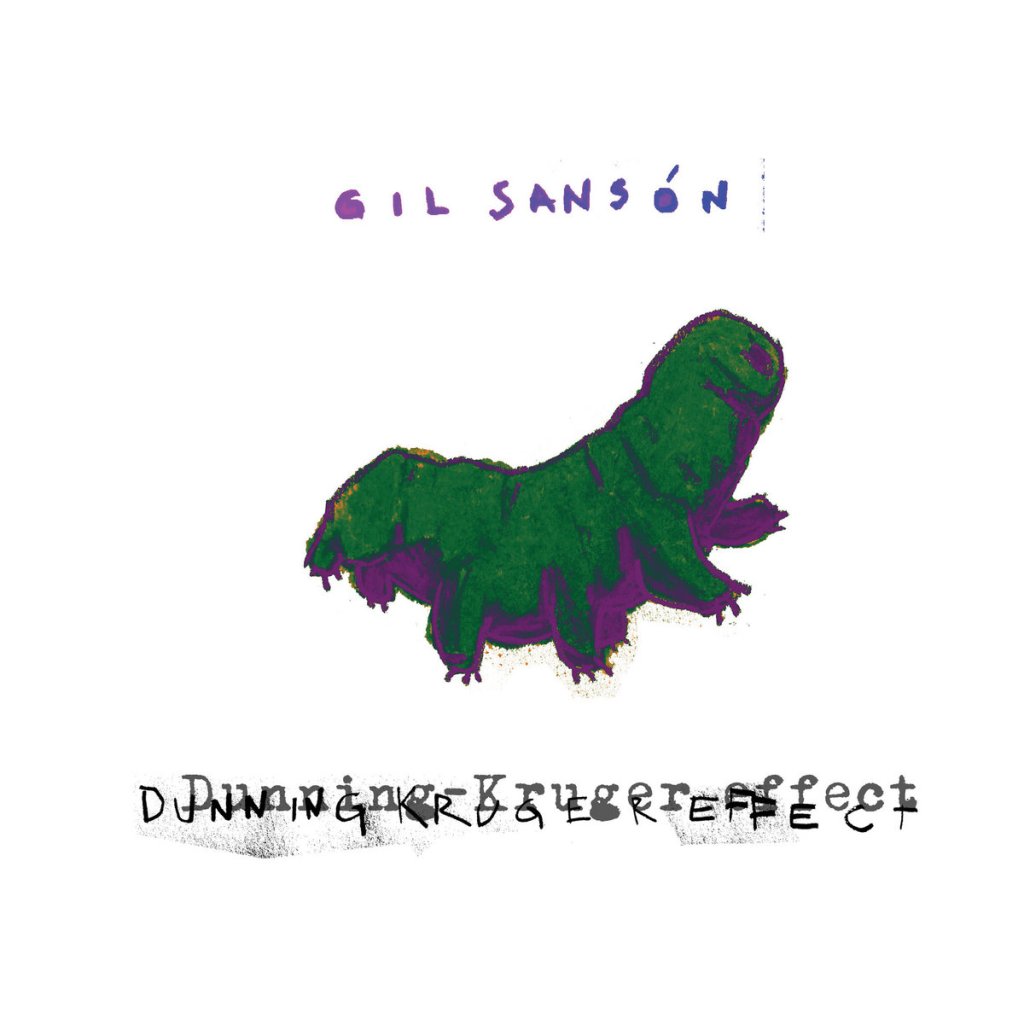
DECAYCAST Reviews: Gil Sansón – Dunning-Kruger Effect
Gil Sansón’s latest release, Dunning-Kruger Effect, is a adventerous and intellectually provocative venture into the realms of contemporary minimal guitar/voice music. With this album, Sansón not only showcases their impressive versatility of collating minimal sounds together, but the record keeps us listening and engaged for the next sonic event no matter now tiny or hidden.
From the moment the first track, “Illusions of Grandeur,” kicks in, it’s clear that Sansón is not afraid to challenge conventional musical boundaries. The album’s production is marked by a bold and experimental approach, blending elements of electronic, indie rock, and classical influences with a “small but powerful” approach to birthing sounds. The result is a sonic landscape that feels both fresh and familiar, a testament to Sansón’s innovative experimental spirit.
The title track, “Dunning-Kruger Effect,” is a standout piece that encapsulates the album’s thematic core. It’s a complex composition, weaving intricate melodies with dissonant harmonies, plucks ad scrapes to lead the listener astray, but in the best way, reflecting the dissonance between self-perception and reality. T
Another highlight is “Echo Chamber,” where Sansón experiments with layered textures and rhythmic shifts that create a sense of disorientation and introspection. The song’s arrangement mirrors the concept of an echo chamber, with repetitive motifs that build in complexity, symbolizing the entrapment within one’s own echoing thoughts and beliefs.
The album’s production is notable for its meticulous attention to detail. Sansón has crafted a sound that’s rich and immersive, which small and investagative, utilizing a variety of instrumental techniques and effects to create a multidimensional listening experience. The blending of traditional and modern elements results in a sound that is both innovative and accessible, appealing to a broad spectrum of listeners.
With its blend of intricate compositions, thematic depth, and innovative production, it offers a rewarding experience for those willing to engage with its complexity. Sansón’s ability to intertwine profound psychological themes with his music marks him as an artist of considerable talent and vision, and this album stands as a testament to his creative prowess.
Sour Spirit, a band between frontman Rodnie King and drummer Riot Dent, is the sound of walking into a scream room, preparing to scream and only ever screaming inside their head. It’s a cathartic noise punk project in which the focus is on the hell of black trauma and anger. You can say that the appeal of Sour Spirit is that their brand of noise and experimental isn’t too far from free jazz, where melody, rhythm and all aren’t as important as the emotional catharsis, however explosive it may be.
You can certainly say that MSIII has cleaner vocals and a lyric sheet this time. Still raucus as ever, “Ground Teeth” showcases structure in the songwriting mirroring a math element to hardcore punk. But don’t let the classiness fool you. Mince Suite III moves towards a sludgy, dirty end of punk. The common theme of the album is suffering, whether it be suffering apathy towards an inevitable death as a black person in America or even praising the “end” of a prejudiced person’s “suffering”. The album even tackles the effort to end suffering of other people and build something beautiful in the wake (the closer “Big House”).
Their Mince Suite series further prove this with blown out aggressive grindcore that is only ever made to be a blip of aggression. Those keeping up with the series noticed that the music just happens to be longer with every entry. The first Mince Suite entry is a literal minute long with each track hardly crossing over fifteen seconds. Mince Suite II doesn’t let up on the mayhem, but extends it past that miniature 15-second blast sometimes into making sure no song is longer than 32 seconds. Only two songs are that long.) So, after hearing the series, Mince Suite III should follow the pattern of being more “filled out”, right?
Mince Suite III still covers the frustration of living in a dying universe that wants them to die faster but this time makes clear the act of changing course, even if it has to be through aggressive means. There are only so many words to say, and Mince Suite III said only what was necessary.
YAMA UBA are no strangers to breaking down walls. Through the strings connecting their previous musical efforts to the seminal album, Silhouettes (releasing January 23, 2024 on Psychic Eye Records and Ratskin Records), the US-based duo of Akiko and Winter has slowly and methodically chiseled a sonic and conceptual world all their own.
Through music videos and selective live performances culminating with a Fall 2023 Japan tour, the duo has been steadily building momentum, but all at their own pace and by their own rules. Silhouettes is the culmination of years of refining a vision over time, yet it feels natural and timeless in the most refreshing way possible. Decaycast team sits down with the duo to discuss their new album Silhouettes and their single “Facade,” which is out today! Listen below, and pre-order the album today.
What ground does Silhouettes cover, musically and conceptually?
Akiko: The album didn’t start out with any particular concept, but just because of the timeframe of our writing — five years, as opposed to one-and-a-half or two years in my previous work, we ended up with something that represented that passage of time in our own lives. I think, more universally, the album also speaks to the long-term process of personal evolution. These songs individually are all about the sometimes-difficult moments that give us an opportunity for reflection, and lead to self-discovery. As a whole, I’d say the album is about personal transformation. It’s about how for that to happen, you have to be willing to shed false or outdated beliefs, confront aspects of your life and self that aren’t fun to look at, and give voice to the parts of yourself that have been silenced.
Winter: Silhouettes covers a lot of experiences and expressions of transforming and transmuting energies. It’s a representation of becoming many different forms of self. It’s one the first recordings of me debuting my vocals and saxophone in a full album. It’s an album we both had full creative freedom with, and we were able to expand musically as much as we felt we needed to. We both went through many changes and transformations throughout this album, and this album portrays and reflects that.
Your latest single is called “Facade.” What is it about?
Winter: “Facade” is about tearing down the walls of false illusion, dismantling any and all power over us that keeps us from being our truest and best selves. It’s a commemoration and celebration of dismantling old structures of belief from a worldwide perspective, within ourselves and outside ourselves, taking down all forms of oppression and injustice.
Akiko: I also think of “Facade” as being about dismantling power and tearing down the illusion of hierarchy. I’ve always had that anarchistic instinct to destroy systemic power structures in the larger world, but this song is about the moment you realize how insidiously those power dynamics are replicated in your own life. It’s about no longer making it your sole responsibility to make a relationship work, and finding the courage to admit that your only way forward is out – out of an abusive situation, out of toxic cycles, out of a social environment that seeks to pigeon-hole, define, or take advantage of you, and out of any structure that is held up by holding you down. It’s about finally breaking free from oppressive power dynamics, and then watching those who held you down fall apart around you. That’s when you can recognize that the abuse you tolerated, to some degree, required your own permission. Even if you get mad at yourself for that, acknowledging and taking responsibility for it becomes its own form of freedom.
We might not individually have the power to stop the most advanced military in history, but we do have the ability to state that the institutional narratives are outright lies, and to simply refuse to be brainwashed… The crack in the facade, and the tumbling of the tower, starts with each of us.
In “Facade,” there is a long refrain of “It’s just a kiss from a narcissist” throughout the outro. What are you referring to?
Akiko: The song is about breaking free of abuse, and that line speaks to how it feels when you realize how cheap and effortless the scraps of recognition or affection are that you receive in uneven relationships. When we sing it, it reminds me how many times I would have to repeat something like that to myself, sometimes for years, to build up the resolve to finally escape an abusive relationship. I think that, as well as the exhilaration of finding your freedom, is something any abuse survivor can understand.
We don’t limit ourselves with our sound and we embrace fully going anywhere we want to go. We utilize anything and everything we can, constantly experimenting and approaching our music in a way that feels exciting.
I also think of those lines in “Facade” as I witness global events, where you can see the dynamic of the narcissistic abuser and the abused in imperialism and in capitalism. It feels very personal to witness, for example, the US and Israeli government committing genocide in realtime, right in front of us. In this case, the US and Israeli governments play the role of the narcissist, who only sees others as tools to get what they want, and not as human beings. In colonization, we see the same tactics used in abusive personal relationships: systemic gaslighting, outright lying, abuse of social and institutional power, enforced isolation of the victim, humiliation and dehumanization, leading finally to physical harm or murder. We see the colonizer’s attacks on culture, history and identity in tandem with attacks on the colonized people’s humanity and on life itself. It’s very similar to how personal attacks, criticism and belittling are a part of a larger campaign for total control in abusive personal relationships.
We might not individually have the power to stop the world’s most advanced military in history, but we do have the ability to state that institutional narratives are outright lies, and to simply refuse to be brainwashed. We can say, “We see you, the richest and most elite people in the world, using all the world’s wealth without our consent, to kill the poorest and the most powerless. You employ weapons of mass destruction to purposely target and kill children, poets, doctors, and teachers, and then you claim a moral superiority.” That has to happen for any other change to take place, and it’s something we’ll always have the power to do. The crack in the facade, and the tumbling of the tower, starts within each of us.
There is a noticeable difference in the sound of Yama Uba vs either of your previous projects, Ötzi or Mystic Priestess. How does the difference in sound palette affect your compositions?
Winter: The difference is there are no bounds in Yama Uba. We don’t limit ourselves with our sound and we embrace fully going anywhere we want to go. We utilize anything and everything we can, constantly experimenting and approaching our music in a way that feels exciting. We are able to break out of our comfort zone to explore and express ourselves in every way possible. One song can portray the energy of tearing down walls and setting fire to everything, while another is about looking at something from a new perspective, and rebuilding everything in a new way.
Akiko: I think because we have less defined roles in Yama Uba than in a traditional band structure, we can start purely from the intentional and emotional root of a song. We can play improvisationally and build off that if we want to, but it’s not required to have a bunch of people jam together until something clicks, and that alone makes a huge difference. It’s more like, “I’m feeling a song about this subject. Here are the lyrics, or here is this guitar line” – and then if we’re both feeling it, we build a world around that emotion, supporting it with whatever seems appropriate. Of course I’m unlikely to take up guitar or saxophone in this band, and Winter is unlikely to take up bass or synth drum programming, but we can have all or none of those instruments at our disposal. There’s no sense that we have to, for example, write a line so the synth player has something to play. Every sound is purposeful and exists in service to the idea, and that is definitely freeing. I think it’s really advanced us both as artists.
Winter’s vocals artfully emanate raw emotion on the tracks “Facade,” “Isolation” and “Claustrophobia.” What led to Winter’s singing on these particular tracks?
Winter: I have always been shown great support from Akiko to sing more. At the time we wrote these songs, we felt it was fitting to capture the raw feeling and emotion in my vocals to signify the atmosphere of those songs. It’s a representation of how overcoming something is not always comforting or pretty. It’s about finding beauty and appreciation in the raw expression of releasing, and to find strength and power within that vulnerability. It’s about truly appreciating and embracing the rawness, no matter what it looks or feels like, because it is the most genuine form of expression.
What inspires you as musicians?
Winter: I grew up listening to a lot of different styles of music. Everything from jazz, pop, punk and heavy metal. I draw inspiration from anywhere and everywhere. I am inspired by any form of expression that portrays a message and deeper meaning.
Akiko: I’ve always enjoyed all kinds of modern music, but in the past few years I’ve become very inspired by traditional musical forms from Japan. I’m learning several forms of traditional music and dancing arts, and by that I mean going back to 800 years ago! I also meditate and do somatic therapies for my chronic illness, which encourages me to sing and to learn scales from non-Western cultures. I’ve been playing music long enough that it’s become inseparable from life itself, so I view music and life in a very holistic way at this point, and as a sort of spiritual path. Everything in my life influences and inspires my music, and my music influences and inspires everything in the rest of my life.
What’s next for Yama Uba?
Akiko: The next release after Silhouettes drops is a 2-CD compilation I curated on my label, Psychic Eye Records, that jointly benefits the people of Gaza and the unhoused community of Oakland, California, where I live. That compilation is called The Ancient Wall, and drops in early February. It has over 40 of my favorite bands, so I’m really excited to get that out there. The Yama Uba song on the compilation is actually “Facade,” so I’d encourage anyone reading this to buy the compilation, which will probably sell out pretty fast!
Then, we’ll have a new music video coming out that I’ve worked on harder than any video in my life, so I’ll be proud of it just being out there and existing. Other than that, I’m trying to learn to not always worry about what’s next, and just enjoy the present. I’ve taken a step back from the sometimes manic-feeling cycle of music production and promotion, and I’m just enjoying this quiet time before Spring. Nothing is fully scheduled yet, but Yama Uba will definitely be touring parts of the US, and is likely to tour Italy, in 2024. Japan was incredibly fun to tour in 2023, so we might go back there in 2024, and maybe to Australia. We’re interested in so many things and so many places that I try to just stay flexible, and be open to the opportunities to come to us.
On Ka’a Davis and Bushmeat Sound System – Dollar Bill Set the World On Fire
Each album that Thomas Bushmeat Stanley (aka Bushmeat Sound System) releases is like a more afrofuturistic take on the “jazz body” theory. Whether it be tackling trance music or letting a bit of noise blast through the speakers, the interpretation concerning whether or not to imagine a much more structured or less cacophonous world or let the mangledness be a soundtrack to said heightened cacophony here in America is up to you. Dollar Bill Set the World on Fire is Bushmeat on synths while On Kaa’a Davis assists with improvised electric guitar. Together, they create an almost electronic/psychedelic take on spiritual jazz. As easy as it is to take it as an audio peek into a world that threatens to get even more dystopic, more maddening with time. The mention in the bio of Sun Ra’s “Alter Destiny” also suggests the music to be a sound of a whole newly constructed universe.
To further assist with this album is Thomas Stanley’s interview of Sun Ra named “Alter Destiny– A Survivor’s Guide”, where the two terms are further broken down by Sun Ra. “You have to use an equation and use the vice future, the alter future. You know, in the church they use the altar, a-l-t-a-r. You got to use a-l-t-e-r, alter; that means change. In other words, you substitute a future for the one you got. The one you’ve got ain’t no good,” says Sun Ra. So, the aim may also be to imagine a whole new, much safer world, but to get there you have to travel out of the more frustrating one.
“A Side of Heaven that Can’t Be Seen From the Ground” unfolds like a flower with a smell as shar pas it is strong. Sounds swirl, beep, skronk like a person who uses rock n’ roll as a refuge to combat the discomfort off a dirty atmosphere. “Black Swans Coming Home to Roost” is where the dust settles and the clanging noise of static may as well be the sound of a clock ticking faster than its normal speed. The sound of the future as we have always imagined it glitching before our eyes and malfunctioning in front of you. The cacophony continues, and even comes to a head, with the more explosive and epic title track. The second epic “A World Without Any White People” knocks and whirrs like an electro track from the 80s spinning out of control with only the sound of faint radio playing synths to guide the journey. The moment you finally landed, you have distorted bells, blinking synth brass to greet those on board.
A bouillabaisse of distorted noise, ambient, free jazz and rock, Dollar Bill Set the World on Fire can be taken as a soundtrack to the revolution, if you want it to be or it can be an album that sounds like what today’s madness sounds like. Either way, with a sense of imagination and focus, Dollar Bill sounds like a slightly distorted vision of a tomorrow you may or may not ever see. –mynameisblueskye
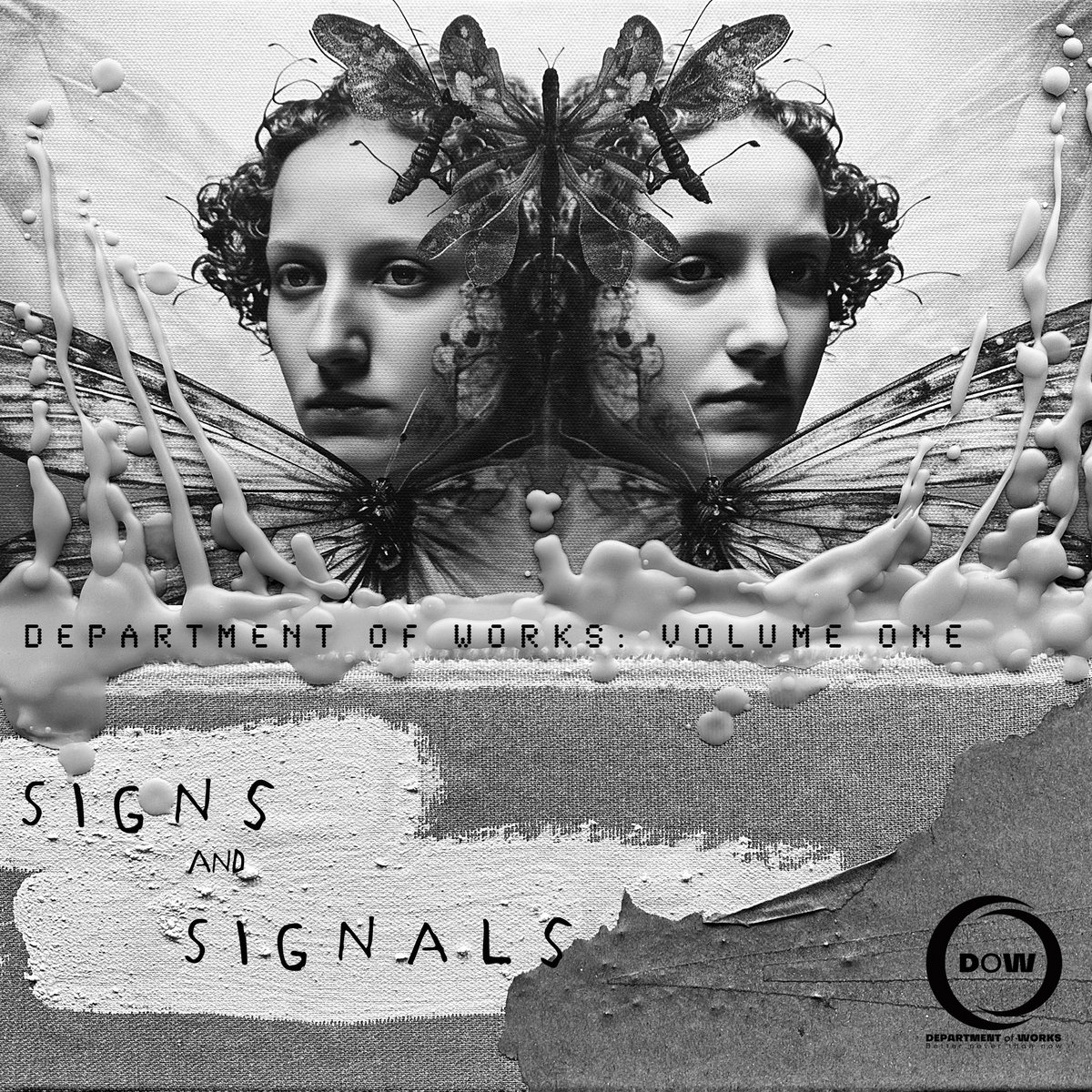
In the vast and ever-evolving landscape of experimental music, there are artists who push the boundaries of sonic exploration, challenging our preconceived notions of music itself. “Signs And Signals” ,” the latest offering from the enigmatic artist known simply as Department Of Works , is a remarkable testament to the boundless possibilities of musical experimentation. Blending elements of psychedelia, intricate beats, ethereal synthesizers, and distant vocals, this album takes listeners on a mesmerizing journey through uncharted sonic territories.
The album starts with distant, almost ghostly vocals that seem to float in the air, setting an otherworldly tone. As the song progresses, layers of synthesizers and subtle beats gradually envelop the listener, creating a sense of anticipation and intrigue. It’s a captivating start that draws you in, inviting you to embark on this sonic voyage.
“Signs and Signals” immerses the listener in a surreal, kaleidoscopic realm of sound. The psychedelic influences are immediately apparent in the swirling, hypnotic melodies and the use of unconventional instruments. The beats here are intricate and unpredictable, creating a sense of constant flux. The distant vocals, though unintelligible, add an ethereal quality that enhances the dreamlike atmosphere. , crafting lush, nostalgic melodies that evoke a sense of melancholic beauty. The distant vocals are used sparingly, enhancing the introspective mood. This album as a whole showcases versatility of a mood and sonic palette, demonstrating an ability to create both frenetic but distant energy and serene moments of introspection within the same album.s ability to craft otherworldly soundscapes while maintaining a sense of emotional resonance is a testament to their artistic prowess. “Signs and Signals” invites you to surrender to its hypnotic spell and embark on a psychedelic journey that will linger in your mind long after the final notes have faded into the ether.
Short blurb from the label:
The Department of Works album ‘Signs & Signals’ is an extension of previous Glove of Bones & Cousin Silas collaborations that also includes musical parts and contributions from Hans Castrup (whose interventions are profound and skilled), izzyhereyet and his colleagues Ursula, Emma & Elliot from RWCMD. Finally, the masked and anonymous ‘Fawkes’, who prompted the creation of the GoB ‘Fawkes Mask’ album. More about that below.
Every artist has a set aesthetic that adds to their art, and no one proves this better than rapper/producers. Whether you are the newscaster, the emo kid, the gangsta or anything, rap music has a tendency to have artists that box themselves in and make it hard to really allow complexities within that. Giovanni Marks is a different animal.
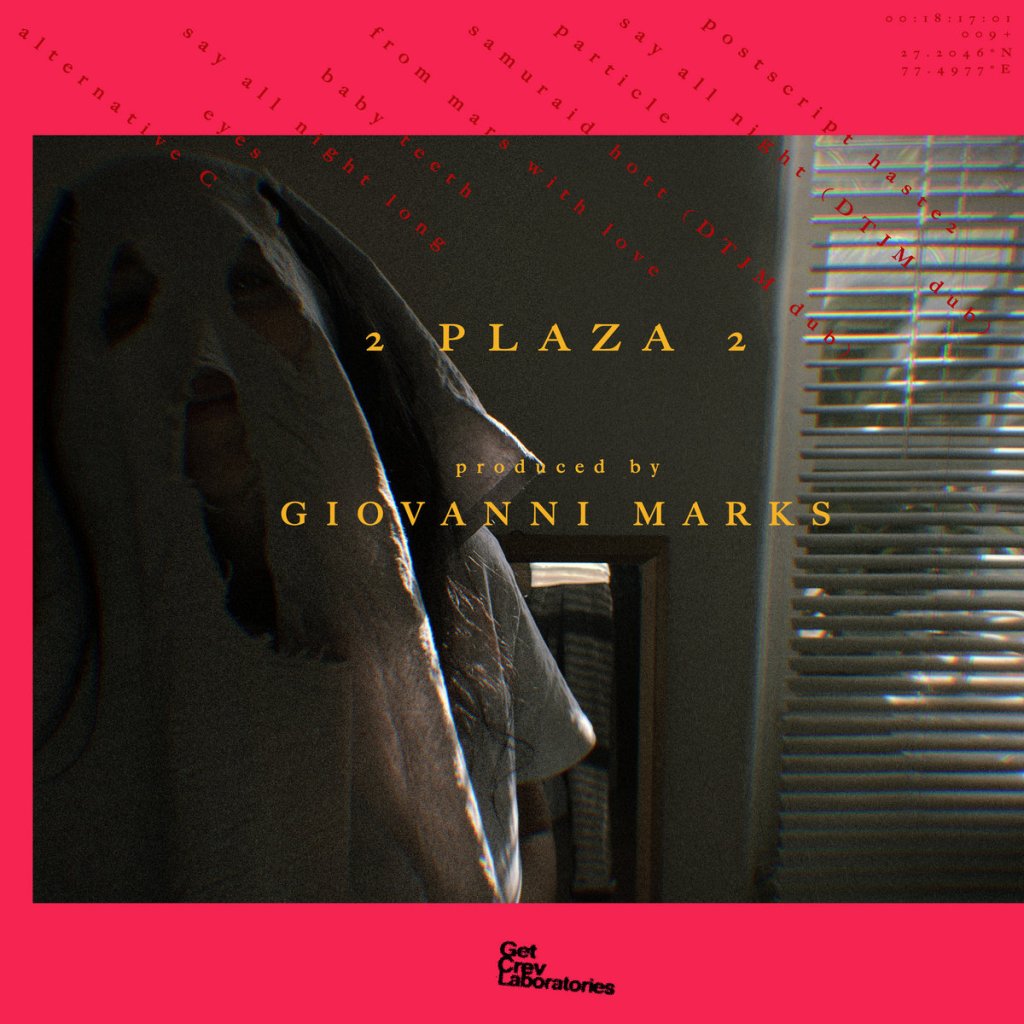
Those who hopped aboard the train either during the subtitle or Giovanni Marks phase, whether he was on Briefcase Rockers, Gold Standard Laboratories, or his own Get Crev Labs, will notice his aesthetic/role is of the cyberpunk, the scientist, the afrofuturist, the nerd with the Kid n’ Play haircut and Dracula cape. If hip hop is currently in its punk rock phase, Giovanni Marks is the New Wave/synthpunk with colored hair, jumpsuits and plenty of electronic instruments to hook up on stage. But while that aesthetic can give way to ideas of being introverted or reclusive, 2 Plaza 2 suggests that this spacey, futuristic aesthetic that Marks has been cultivating for years during his time as an MC is a universe that anybody can take part in.
2 Plaza 2 is a project that finds GIovanni Marks taking a backseat from rapping to assist friends like Juan Huevos and pink siifu with the avant-garde production he is known for. Take the opener, for example. A slow red siren rumble of synth bass giving way to an anonymous rewound sound all adding up to a sound that is as musically unsettling as it is fascinating. That is just “Alternative C”, which bears the subtitle of being the “nox-vox version”. While you are busy working out how the vox version would be delivered, singer Joseph Squire transforms a stomping noiresque beat into a seductive R&B track that leaves before you find yourself really falling into the groove.
Friends from art-rapper/multidisciplinary artist Koreatown Oddity, Pink Siifu and Mason Williams all come in to give color to Marks’ production from the rallying “Baby Teeth” to the intergalactic stream-of-consciousness delivery in “all night long” (which is delivered as both a regular track and a “space dub”) to the bounce of “Samuraid Hott” that will surely have trouble evading Shabazz Palaces vibes. They all may sound like fragments of ideas underneath a half-hour, but the shift from style to style is fascinating enough not only to keep your attention, but to likely leave you wanting to revisit such world all over again.
2 Plaza 2 can be described as a front row seat into Giovanni Marks’ world of spacey production, but what is different about this project, it’s that it insists that this electronic/avant-rap universe he has been building for years now isn’t only for him.
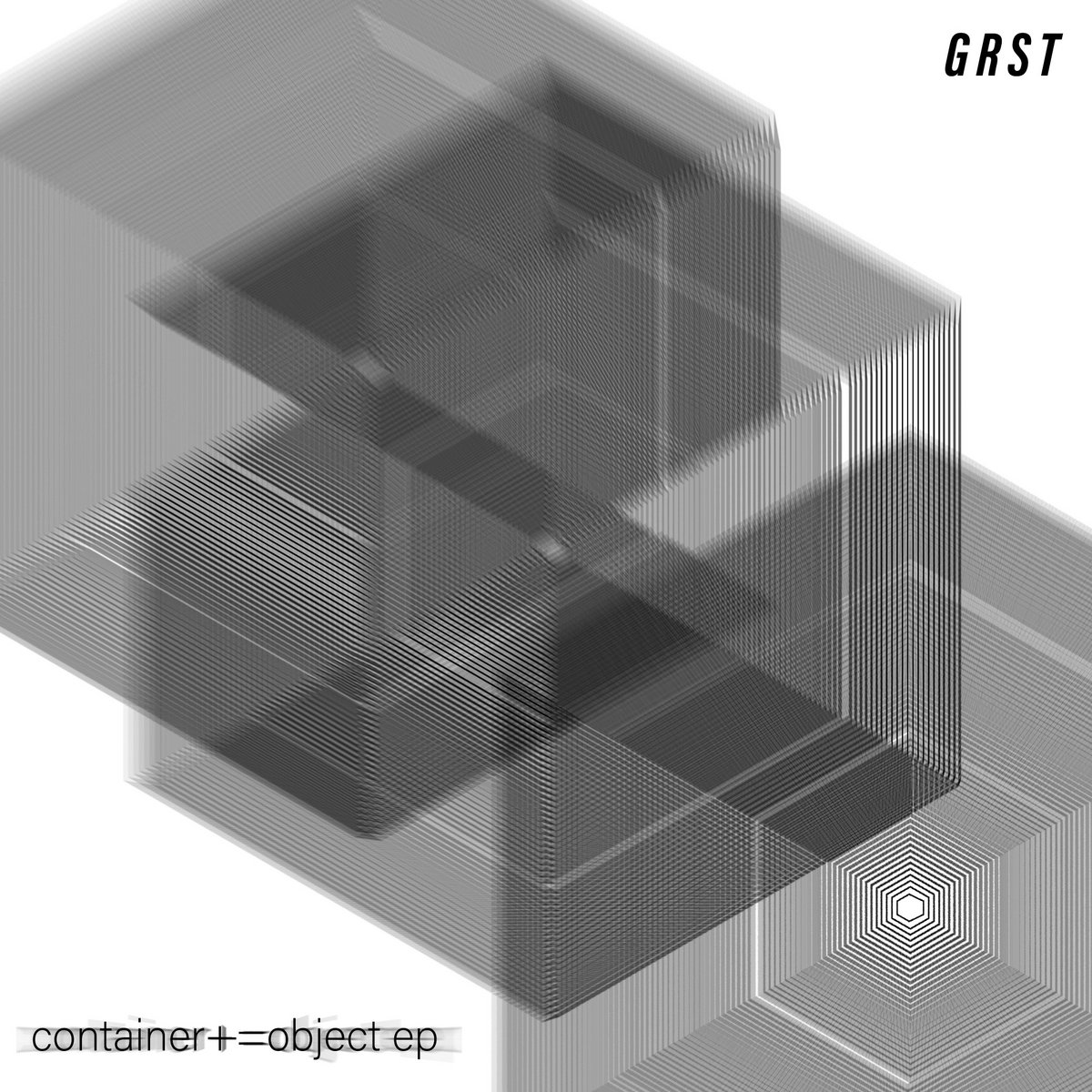
GRST ‘container+=object EP’’s pleasingly adjunct description states only that it relies upon ‘a variety of electro-acoustic techniques and physical modelling’, eschewing any form of wild conceptual structure in favour of a more detailed sonic study. Connoisseurs of physical modelling synthesis will no doubt recognise its presence – we’re not dealing with bold new territories here, but rather some extremely pensive, rhythmically free wanderings that travel from additive washes to organic plucks and rattles. The absence of any measurable pulse is perhaps ‘Maracaibo’s’ strongest feature – its textures are allowed to ebb and flow between various synthetic states without ever feeling pressured to reveal a defined compositional logic.
In contrast, the second track, ‘aruba’, invokes a distinctly modular tact, tying bursts of reverb to the gestating clangs and urgent bounces across glass and metal. We get some nieve stabs at melody, too, meandering repetitions that dance back and forth like the song of a sinister, cartoon music-box. Theres no development proper, nor does there need to be – ‘container+=object’ works precisely because it sets up a limited palette and then proceeds to meekly explore its affordance, the listener invited to observe as GRST tests the sonic properties of each corner in turn.
– Daniel Alexander Hignell-Tully
Daniel Alexander Hignell-Tully is a composer, video and performance artist from the UK. He produces work under the Distant Animals moniker (www.distantanimals.com), and runs both the production company 7000 Trees (www.7000trees.com) and the Difficult Art and Music label (difficultartandmusic.bandcamp.com). He holds an actual proper grown-up PhD in contemporary music, and currently lectures at the Guildhall School of Music and Drama.
B L A C K I E: Face the Darkness reviewed by mynameisblueskye
“What is freedom to the average person?”
How ever you answer that question, the one thing you should know is that it probably doesn’t mean the same thing as does to art-punk auteur Michael LaCoeur aka B L A C K I E. To those who have ever listened to B L A C K I E, you will release that his album represents a natural freedom. The freedom to just be the man he was made to be without the world seeking to destroy him or cage him in. Nomadic by nature, nonconformist by choice and perhaps even by nature and unafraid to encourage it for others in his position. The opening lines of “While They Try to Kill Each Other” outlines one of his overall thesis of being B L A C K I E over electric drums better than any of us could ever try.
“Children laugh while they try to kill each other/at least the blood returns to the earth where it belongs, and out of the hands of in power”, bellows Michael in his dry and world-weary town crier scream. With danger everywhere in his wake, it would make sense that he finds silver linings here…if that is what you want to call it. On “There Is No Light”, he reports the history of laid waste in front of and committed towards the people. “There was no food, there were fists/there were no light, there were fists” all to come back to the devastating line. “We use to eat each other!” Entrails wrapped in crimson blood line the periphery of wherever B L A C K I E looks, even amongst those who towards those who call themselves allies and heroes. His second overall thesis “I am not you’r nigger!” is delivered in an angry tone only punctuated by a deep sense of pain and sorrow.
B L A C K I E’s mind may be a mass of continuously spinning wheels, but he will be damned if it ever spins for you. Even as he tackles topics such as suffering from a crippling addiction (“How to Let It Control You”), toxic “patriotism” (“Wave Your Flag”) and fascism/fake empathy (“Uncounted”), Michael knows that even HE is not above occupying the hot seat. Painting a picture of anxiety through a descriptive lens, “Meet the Demons” is claustrophobic in its description of not being able to think and feel freely.
Not being able to just be without judgment. So, after all of this, hearing him emerge free and ready to escape on “It Can’t Define Me” feels not only heartening, but like an anthem written to those looking for their own escape. B L A C K I E’s Face the Darkness may start off as B L A C K I E in the slaughter line witnessing victims meeting their end in HD and plotting his escape from such slaughter, but it sees to it that he isn’t his own cause of danger to himself. In the midst of this, B L A C K I E emerges with one last message (clue, rather) that overall defines not only the entire album, but the world and the philosophy of B L A C K I E: “Look around/Don’t look down”.
– Mynameisblueskye
Mynameisblueskye is a singer, songwriter, poet, and occasional blogger. An American-born Renaissance man who loves music so much, he has too many videos in his Watch Look after list. His bandcamp can be found here:
Morose and warm new visual from Hedia – “Untitled 3” from the Quartets cassette that came out in July.
A beautiful union of enveloped, undulation machine of reverberated moods; a warm refreshing breath in cinematic neo-classical minimalism. Pinched tones, crawling, yearning for a new breath, a new beginning, Hedia works the space of decaying sound in a beautiful and nuanced treatment of the sounds themselves bringing the space to live in a tremendously rich pattern.
With hedia, I hope to create a blank space for the listener to enter and find stillness for a moment, unfocus your eye, escape from the desert heat.” – Bryce Hample
Microscopic sonic events washing ashore fade into arpeggiated synths, but only for a few seconds as envelopes of sound and vision open and close on the viewer to create a somber distortion in both time, place, and vision. A blurry fade into an unknown place, loss, grief, strings, sadness, hope all sputter past each other like blurred pedestrians buzzing through a rush-hour rain station. For a few moments, we have some peace.
Hedia is the music of multi-instrumentalist Bryce Hample. Hedia is spacial music, creating a place to inhabit, if only temporarily. Musical spaces to encompass the listener, unfolding organically and spaciously, in a blanket of drifting piano chords, viola da gamba, brass, subdued guitar, and tape manipulations.









 D E C A Y C A S T Magazine